
Is cineál carraige bruitíneach é eibhear a bhaintear as a neart, a dhlús, a marthanacht agus a fhriotaíocht i gcoinne creimeadh. Ach tá eibhear an-ildánach freisin - ní hamháin le haghaidh cearnóga agus dronuilleoga atá sé! Déanta na fírinne, oibrímid go muiníneach le comhpháirteanna eibhir atá innealtóireachta i gcruthanna, uillinneacha agus cuartha de gach cineál go rialta - le torthaí den scoth.
Trí ár bpróiseáil den scoth, is féidir dromchlaí gearrtha a bheith thar a bheith cothrom. Fágann na cáilíochtaí seo gur ábhar idéalach é eibhear chun bunanna meaisín agus comhpháirteanna meitreolaíochta de mhéid saincheaptha agus de dhearadh saincheaptha a chruthú. Is é an eibhear:
■ inmheaisínithe
■ cothrom go beacht nuair a ghearrtar agus a chríochnaítear é
■ frithsheasmhach in aghaidh meirge
■ buan
■ buan
Tá comhpháirteanna eibhir éasca le glanadh freisin. Agus dearaí saincheaptha á gcruthú agat, bí cinnte eibhir a roghnú mar gheall ar a buntáistí sármhaithe.
CAIGHDEÁIN / FEIDHMEANNA ARDCHAITHEAMH
Tá cion ard grianchloch sa ghloine a úsáideann ZHHIMG dár dtáirgí pláta dromchla caighdeánach, rud a sholáthraíonn friotaíocht níos fearr i gcoinne caitheamh agus damáiste. Tá rátaí ísle ionsúcháin uisce ag ár ndathanna Superior Black, rud a laghdaíonn an fhéidearthacht go meirgefaidh do thomhasairí beachtais agus iad á socrú ar na plátaí. Mar thoradh ar na dathanna eibhir a thairgeann ZHHIMG, bíonn níos lú glare ann, rud a chiallaíonn níos lú brú súl do dhaoine aonair a úsáideann na plátaí. Roghnaíomar ár gcineálacha eibhir agus leathnú teirmeach á chur san áireamh againn d’fhonn an ghné seo a choinneáil íosta.
FEIDHMEÁIN SAINCHEAPTA
Nuair a bhíonn pláta le cruthanna saincheaptha, iontrálacha snáithithe, sliotáin nó meaisínithe eile ag teastáil le haghaidh d’fheidhmchláir, ba mhaith leat ábhar cosúil le Black Jinan Black a roghnú. Cuireann an t-ábhar nádúrtha seo dolúbthacht níos fearr, maolú creathadh den scoth, agus inmheaisínteacht fheabhsaithe ar fáil.
Tá sé tábhachtach a thabhairt faoi deara nach léiriú ar cháilíochtaí fisiciúla na cloiche é an dath amháin. Go ginearálta, baineann dath eibhir go díreach le láithreacht nó neamhláithreacht mianraí, agus ní fhéadfadh aon tionchar a bheith aige sin ar na cáilíochtaí a dhéanann ábhar maith pláta dromchla. Tá eibhir bándearg, liath agus dubh ann atá den scoth le haghaidh plátaí dromchla, chomh maith le heibhir dubh, liath agus bándearg atá go hiomlán neamhoiriúnach d'fheidhmchláir bheachtais. Níl baint ar bith ag tréithe criticiúla eibhir, a bhaineann lena úsáid mar ábhar pláta dromchla, le dath, agus is iad seo a leanas iad:
■ Dolúbthacht (diall faoi ualach - léirithe ag Modúl Leaisteachta)
■ Cruas
■ Dlús
■ Friotaíocht chaitheamh
■ Cobhsaíocht
■ Poróiseacht
Rinneamar tástáil ar go leor ábhar eibhir agus rinneamar comparáid idir na hábhair seo. Ar deireadh, fuair muid an toradh, is é eibhear dubh Jinan an t-ábhar is fearr a bhfuil aithne againn air riamh. Tá eibhear dubh Indiach agus eibhear na hAfraice Theas cosúil le Eibhear Dubh Jinan, ach tá a n-airíonna fisiceacha níos lú ná Eibhear Dubh Jinan. Leanfaidh ZHHIMG ag cuardach níos mó ábhar eibhir ar domhan agus déanfaidh siad comparáid idir a n-airíonna fisiceacha.
Chun tuilleadh eolais a fháil faoin eibhear atá ceart do do thionscadal, déan teagmháil linninfo@zhhimg.com.
Úsáideann monaróirí éagsúla caighdeáin éagsúla. Tá go leor caighdeán ar fud an domhain.
Caighdeán DIN, ASME B89.3.7-2013 nó Sonraíocht Chónaidhme GGG-P-463c (Plátaí Dromchla Eibhir) agus mar sin de mar bhonn dá sonraíochtaí.
Agus is féidir linn pláta cigireachta cruinneas eibhir a mhonarú de réir do riachtanais. Fáilte romhat teagmháil a dhéanamh linn más mian leat tuilleadh eolais a fháil faoi chaighdeáin eile.
Is féidir cothromaíocht a mheas mar gach pointe ar an dromchla atá suite laistigh de dhá phlána comhthreomhara, an plána bonn agus plána an dín. Is é tomhas an achair idir na plánaí cothromaíocht fhoriomlán an dromchla. De ghnáth bíonn lamháltas ag baint leis an tomhas cothromaíochta seo agus d'fhéadfadh ainmniú gráid a bheith san áireamh ann.
Mar shampla, sainmhínítear na lamháltais cothromaíochta do thrí ghrád chaighdeánacha sa tsonraíocht chónaidhme mar a chinntear leis an bhfoirmle seo a leanas:
■ Grád Saotharlainne AA = (40 + trasnán cearnógach/25) x .000001" (aontaobhach)
■ Grád Cigireachta A = Grád Saotharlainne AA x 2
■ Seomra Uirlisí Grád B = Saotharlann Grád AA x 4.
I gcás plátaí dromchla de mhéid chaighdeánach, ráthaímid lamháltais chothromais a sháraíonn ceanglais na sonraíochta seo. Chomh maith le cothromas, pléann ASME B89.3.7-2013 & Sonraíocht Chónaidhme GGG-P-463c ábhair lena n-áirítear: cruinneas tomhais athuair, airíonna ábhartha eibhir pláta dromchla, bailchríoch dromchla, suíomh pointe tacaíochta, dolúbthacht, modhanna cigireachta inghlactha, suiteáil iontrálacha snáithithe, etc.
Comhlíonann plátaí dromchla eibhir ZHHIMG agus plátaí cigireachta eibhir na ceanglais uile atá leagtha amach sa tsonraíocht seo, nó sáraíonn siad iad. Faoi láthair, níl aon sonraíocht shainiúil ann do phlátaí uillinne eibhir, comhthreomhar, nó cearnóga máistir.
Agus is féidir leat na foirmlí do chaighdeáin eile a fháil iÍOSLÓDÁIL.
Ar dtús, tá sé tábhachtach an pláta a choinneáil glan. Is gnách gurb é deannach scríobach san aer an fhoinse is mó caitheamh agus cuimilt ar phláta, toisc go mbíonn sé i mbaol dul i bhfeidhm ar phíosaí oibre agus ar dhromchlaí teagmhála na dtomhasairí. Ar an dara dul síos, clúdaigh do phláta chun é a chosaint ar dheannach agus ar dhamáiste. Is féidir saolré an chaitheamh a fhadú tríd an pláta a chlúdach nuair nach bhfuil sé in úsáid, tríd an pláta a rothlú go tréimhsiúil ionas nach bhfaigheann limistéar amháin úsáid iomarcach, agus trí cheapacha teagmhála cruach ar thomhaisairí a athsholáthar le ceapacha cairbíde. Chomh maith leis sin, seachain bia nó deochanna boga a chur ar an pláta. Tabhair faoi deara go bhfuil aigéad carbónach nó fosfarach i go leor deochanna boga, ar féidir leo na mianraí níos boige a thuaslagadh agus poill bheaga a fhágáil sa dromchla.
Braitheann sé seo ar an gcaoi a bhfuil an pláta á úsáid. Más féidir, molaimid an pláta a ghlanadh ag tús an lae (nó an tseal oibre) agus arís ag an deireadh. Má shalachar an pláta, go háirithe le sreabháin olacha nó greamaitheacha, is dócha gur cheart é a ghlanadh láithreach.
Glan an pláta go rialta le glantóir pláta dromchla leachtach nó gan uisce ZHHIMG. Tá an rogha tuaslagán glantacháin tábhachtach. Má úsáidtear tuaslagóir so-ghalaithe (aicéatón, tanaitheoir laicir, alcól, srl.) fuaróidh an galú an dromchla agus saobhfaidh sé é. Sa chás seo, is gá ligean don phláta gnáthú sula n-úsáidtear é nó tarlóidh earráidí tomhais.
Athróidh an méid ama a theastaíonn chun go ngnáthnósóidh an pláta ag brath ar mhéid an phláta, agus ar an méid fuaraithe a dhéantar. Ba chóir go mbeadh uair an chloig leordhóthanach i gcás plátaí níos lú. D’fhéadfadh go mbeadh dhá uair an chloig ag teastáil i gcás plátaí níos mó. Má úsáidtear glantóir uiscebhunaithe, beidh roinnt fuaraithe galúcháin ann freisin.
Coinneoidh an pláta an t-uisce freisin, agus d’fhéadfadh sé seo meirg a chur ar chodanna miotail a bhíonn i dteagmháil leis an dromchla. Fágann roinnt glantóirí iarmhar greamaitheach tar éis dóibh triomú freisin, rud a mheallfaidh deannach san aer, agus a mhéadóidh caitheamh i ndáiríre, seachas é a laghdú.
Braitheann sé seo ar úsáid agus ar an timpeallacht phláta. Molaimid go ndéanfaí athchalabrú iomlán ar phláta nua nó ar ghabhálas eibhir beachtais laistigh de bhliain amháin ón gceannach. Má úsáidtear go mór an pláta dromchla eibhir, b’fhéidir go mbeadh sé inmholta an t-eatramh seo a ghiorrú go sé mhí. Taispeánfaidh cigireacht mhíosúil le haghaidh earráidí tomhais arís agus arís eile ag baint úsáide as leibhéal leictreonach, nó gléas dá samhail, aon spotaí caitheamh atá ag forbairt agus ní thógfaidh sé ach cúpla nóiméad é a dhéanamh. Tar éis torthaí an chéad athchalabrúcháin a chinneadh, féadfar an t-eatramh calabrúcháin a shíneadh nó a ghiorrú de réir mar a cheadaítear nó a cheanglaítear le do chóras cáilíochta inmheánach.
Is féidir linn seirbhís a thairiscint chun cabhrú leat do phláta dromchla eibhir a iniúchadh agus a chalabrú.

Tá roinnt cúiseanna féideartha ann le héagsúlachtaí idir calabrúcháin:
- Níodh an dromchla le tuaslagán te nó fuar roimh an gcalabrú, agus níor tugadh dóthain ama dó chun gnáthú.
- Tá an pláta tacaithe go mícheart
- Athrú teochta
- Dréachtaí
- Solas díreach na gréine nó teas radaíochta eile ar dhromchla an phláta. Bí cinnte nach bhfuil an dromchla á théamh ag soilse lastuas.
- Éagsúlachtaí sa ghrádán teochta ingearach idir an geimhreadh agus an samhradh (Más féidir ar chor ar bith, bíodh a fhios agat an teocht ghrádán ingearach tráth a ndéantar an calabrú.)
- Níor tugadh dóthain ama don phláta chun a normalú tar éis loingsithe
- Úsáid mhíchuí trealaimh cigireachta nó úsáid trealaimh neamhchalabraithe
- Athrú dromchla mar thoradh ar chaitheamh
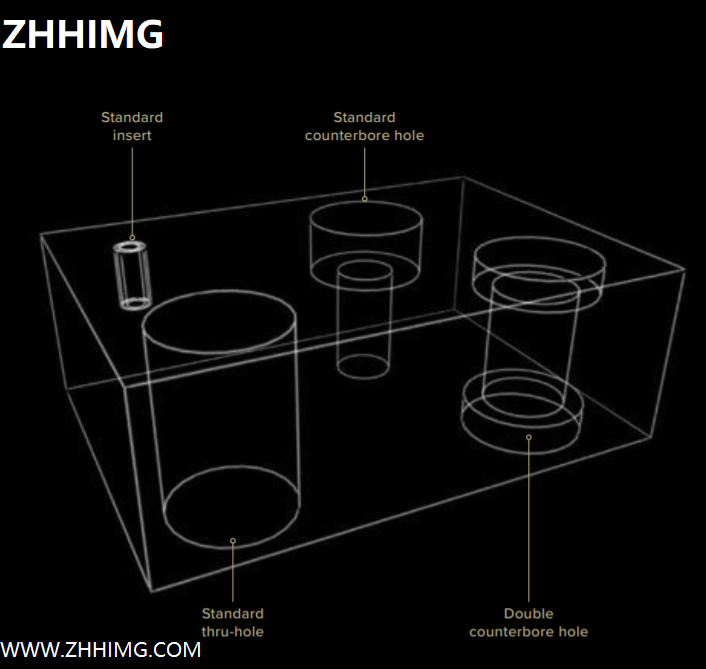
Cé mhéad cineál poill atá ar eibhear beachtais?
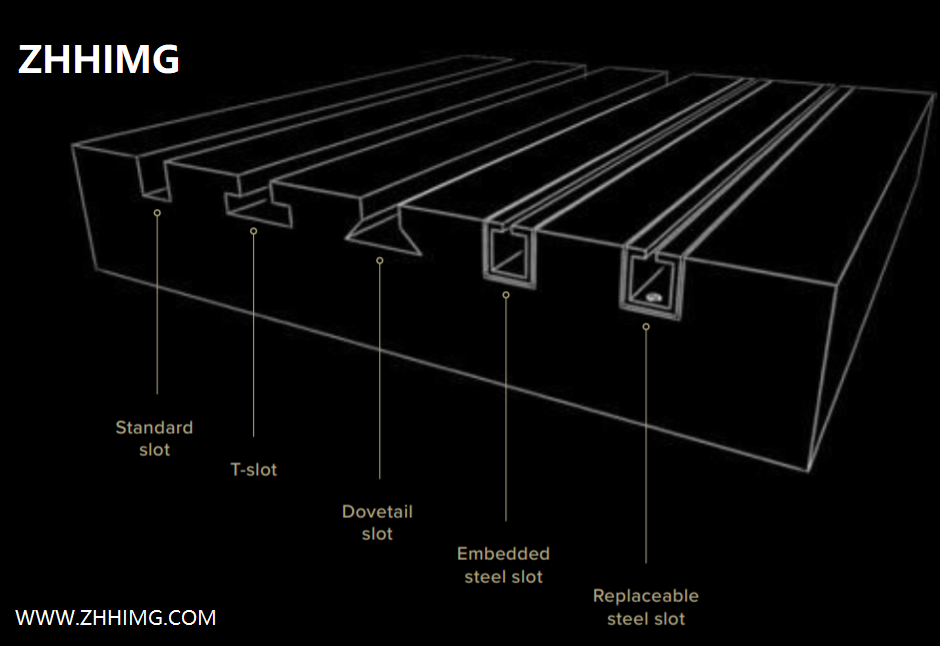
Sliotáin ar Chomhpháirteanna Eibhir Beachtas
I gcás go leor monarchana, seomraí cigireachta agus saotharlanna, braitear ar phlátaí dromchla eibhir bheachta mar bhunús le haghaidh tomhas cruinn. Ós rud é go mbraitheann gach tomhas líneach ar dhromchla tagartha cruinn as a nglactar na toisí deiridh, soláthraíonn plátaí dromchla an plána tagartha is fearr le haghaidh cigireachta agus leagan amach oibre roimh mheaisínithe. Is boinn idéalacha iad freisin chun tomhais airde a dhéanamh agus dromchlaí a thomhas. Ina theannta sin, a bhuíochas dá leibhéal ard cothromaíochta, cobhsaíochta, cáilíochta foriomlán agus ceardaíochta, is rogha mhaith iad chun córais tomhais mheicniúla, leictreonacha agus optúla sofaisticiúla a shuiteáil. Maidir le haon cheann de na próisis tomhais seo, tá sé ríthábhachtach plátaí dromchla a choinneáil calabraithe.
Tomhais Athdhéanta agus Cothromas
Tá an chothrom agus na tomhais athuair ríthábhachtach chun dromchla beacht a chinntiú. Is féidir cothrom a mheas mar gach pointe ar an dromchla atá suite laistigh de dhá phlána comhthreomhara, an plána bonn agus plána an dín. Is é tomhas an achair idir na plánaí cothrom iomlán an dromchla. De ghnáth bíonn lamháltas ag baint leis an tomhas cothrom seo agus féadfaidh sé ainmniú gráid a áireamh.
Sainmhínítear na lamháltais cothromaíochta do thrí ghrád chaighdeánacha sa tsonraíocht chónaidhme mar a chinntear leis an bhfoirmle seo a leanas:
Caighdeán DIN, Caighdeán GB, Caighdeán ASME, caighdeán JJS ... tír dhifriúil le seasamh difriúil ...
Tuilleadh sonraí faoin gcaighdeán.
Chomh maith le cothromaíocht, ní mór in-athdhéantacht a chinntiú. Is tomhas ar limistéir chothromaíochta áitiúla é tomhas athdhéanta. Is tomhas é a thógtar áit ar bith ar dhromchla pláta a athdhéantar laistigh den chaoinfhulaingt shonraithe. Trí chothromaíocht limistéir áitiúil a rialú go dtí chaoinfhulaingt níos doichte ná an chothromaíocht fhoriomlán, ráthaítear athrú de réir a chéile ar phróifíl chothromaíochta an dromchla, rud a laghdaíonn earráidí áitiúla.
Chun a chinntiú go gcomhlíonann pláta dromchla na sonraíochtaí cothromaíochta agus tomhais athdhéanta araon, ba cheart do mhonaróirí plátaí dromchla eibhir Sonraíocht Chónaidhme GGG-P-463c a úsáid mar bhonn dá sonraíochtaí. Pléann an caighdeán seo cruinneas tomhais athdhéanta, airíonna ábhartha pláta dromchla eibhir, bailchríoch dromchla, suíomh pointe tacaíochta, dolúbthacht, modhanna inghlactha cigireachta agus suiteáil iontrálacha snáithithe.
Seiceáil Cruinneas an Phláta
Trí chúpla treoirlínte simplí a leanúint, ba cheart go mairfeadh infheistíocht i pláta dromchla eibhir ar feadh blianta fada. Ag brath ar úsáid an phláta, timpeallacht na ceardlainne agus an cruinneas atá ag teastáil, athraíonn minicíocht seiceála cruinneas an phláta dromchla. Is riail ghinearálta í go ndéanfaí athchalabrú iomlán ar phláta nua laistigh de bhliain amháin ón gceannach. Má úsáidtear an pláta go minic, moltar an t-eatramh seo a ghiorrú go sé mhí.
Sula mbíonn pláta dromchla caite thar an tsonraíocht maidir le cothromaíocht iomlán, taispeánfar cuaillí caite nó tonnacha air. Aithneofar spotaí caitheamh trí chigireacht mhíosúil le haghaidh earráidí tomhais athchleachtacha ag baint úsáide as tomhsaire léite athchleachtach. Is uirlis ardchruinnis í tomhsaire léite athchleachtach a bhraiteann earráid áitiúil agus is féidir í a thaispeáint ar aimplitheoir leictreonach ardmhéadúcháin.
Ba cheart go mbeadh seiceálacha rialta le huath-choiliméadair san áireamh i gclár cigireachta éifeachtach, rud a sholáthraíonn calabrú iarbhír ar an gcothromacht fhoriomlán atá inrianaithe go dtí an Institiúid Náisiúnta um Chaighdeáin agus Teicneolaíocht (NIST). Tá gá le calabrú cuimsitheach ón monaróir nó ó chuideachta neamhspleách ó am go ham.
Éagsúlachtaí idir Calabrúcháin
I gcásanna áirithe, bíonn éagsúlachtaí idir calabrúcháin plátaí dromchla. Uaireanta is féidir le fachtóirí amhail athrú dromchla mar thoradh ar chaitheamh, úsáid mhícheart trealaimh cigireachta nó úsáid trealaimh neamhchalabraithe na héagsúlachtaí seo a mhíniú. Is iad an dá fhachtóir is coitianta, áfach, ná teocht agus tacaíocht.
Ceann de na hathróga is tábhachtaí ná an teocht. Mar shampla, b’fhéidir gur niteadh an dromchla le tuaslagán te nó fuar roimh an gcalabrú agus nár tugadh dóthain ama dó chun gnáthú. I measc cúiseanna eile le hathrú teochta tá dréachtaí d’aer fuar nó te, solas díreach na gréine, soilsiú lastuas nó foinsí eile teasa radaíochta ar dhromchla an phláta.
Is féidir athruithe a bheith ann freisin sa ghrádán teochta ingearach idir an geimhreadh agus an samhradh. I gcásanna áirithe, ní thugtar dóthain ama don phláta chun gnáthú tar éis loingsithe. Is dea-smaoineamh é an teocht ghrádáin ingearach a thaifeadadh tráth a ndéantar an calabrú.
Cúis choitianta eile le héagsúlacht calabrúcháin is ea pláta nach bhfuil tacaíocht cheart aige. Ba chóir pláta dromchla a bheith tacaíochta ag trí phointe, suite go hidéalach 20% den fhad isteach ó fhoircinn an phláta. Ba chóir dhá thaca a bheith suite 20% den leithead isteach ó na taobhanna fada, agus ba chóir an tacaíocht atá fágtha a bheith lárnaithe.
Ní féidir ach le trí phointe luí go daingean ar aon rud ach dromchla beacht. Má dhéantar iarracht an pláta a thacú ag níos mó ná trí phointe, gheobhaidh an pláta a thacaíocht ó chomhcheangail éagsúla de thrí phointe, nach mbeidh na trí phointe céanna ar a raibh sé tacaithe le linn an táirgthe. Tabharfaidh sé seo earráidí isteach de réir mar a chlaonann an pláta chun cloí leis an socrú tacaíochta nua. Smaoinigh ar sheastáin chruach a úsáid le bíomaí tacaíochta atá deartha chun ailíniú leis na pointí tacaíochta cearta. De ghnáth, bíonn seastáin chun na críche seo ar fáil ón monaróir pláta dromchla.
Má tá an pláta tacaithe i gceart, níl gá le leibhéalú beacht ach amháin má shonraítear é san iarratas. Ní gá leibhéalú chun cruinneas pláta atá tacaithe i gceart a choinneáil.
Saol an Phláta a Leathnú
Trí roinnt treoirlínte a leanúint, laghdófar caitheamh ar phláta dromchla eibhir agus, sa deireadh thiar, leathnófar a shaolré.
Ar dtús, tá sé tábhachtach an pláta a choinneáil glan. Is gnách gurb é deannach scríobach san aer an fhoinse is mó caitheamh agus cuimilt ar phláta, toisc go mbíonn sé ag dul i bhfostú i bpíosaí oibre agus i ndromchlaí teagmhála na dtomhasairí.
Tá sé tábhachtach freisin plátaí a chlúdach chun iad a chosaint ar dheannach agus ar dhamáiste. Is féidir saolré an phláta a fhadú tríd an pláta a chlúdach nuair nach bhfuil sé in úsáid.
Rothlaigh an pláta go tréimhsiúil ionas nach mbaintear úsáid iomarcach as limistéar amháin. Chomh maith leis sin, moltar ceapa teagmhála cruach a athsholáthar ar thomhasairí le ceapa cairbíde.
Seachain bia ná deochanna boga a chur ar an pláta. Bíonn aigéad carbónach nó fosfarach i go leor deochanna boga, agus is féidir leis na mianraí níos boige a thuaslagadh agus poill bheaga a fhágáil ar an dromchla.
Cá háit le hathiompú
Nuair is gá pláta dromchla eibhir a athdhromchlú, smaoinigh ar cheart an tseirbhís seo a dhéanamh ar an láthair nó ag an áis calabrúcháin. Is fearr i gcónaí an pláta a ath-lapáil sa mhonarcha nó in áis tiomnaithe. Mura bhfuil an pláta caite ró-dhona, de ghnáth laistigh de 0.001 orlach den chaoinfhulaingt riachtanach, is féidir é a athdhromchlú ar an láthair. Má tá pláta caite go dtí an pointe go bhfuil sé níos mó ná 0.001 orlach lasmuigh den chaoinfhulaingt, nó má tá poll nó scoilteadh mór ann, ba chóir é a sheoladh chuig an monarcha le haghaidh meilt sula ndéantar ath-lapáil air.
Bíonn an trealamh agus na socruithe monarchan ag saoráid calabrúcháin a sholáthraíonn na coinníollacha is fearr le haghaidh calabrú pláta cuí agus athoibriú más gá.
Ba chóir a bheith an-chúramach agus teicneoir calabrúcháin agus athdhromchlaithe ar an láthair á roghnú. Iarr creidiúnú agus fíoraigh go bhfuil calabrú inrianaithe ag an trealamh a úsáidfidh an teicneoir. Is fachtóir tábhachtach é an taithí freisin, toisc go dtógann sé blianta fada foghlaim conas eibhear beacht a lapáil i gceart.
Tosaíonn tomhais chriticiúla le pláta dromchla eibhir beachtais mar bhunlíne. Trí thagairt iontaofa a chinntiú trí phláta dromchla atá calabraithe i gceart a úsáid, tá ceann de na huirlisí riachtanacha ag monaróirí le haghaidh tomhais iontaofa agus páirteanna ar chaighdeán níos fearr.Q
Liosta Seiceála le haghaidh Éagsúlachtaí Calabrúcháin
1. Níodh an dromchla le tuaslagán te nó fuar roimh an gcalabrú agus níor tugadh dóthain ama dó chun gnáthú.
2. Níl an pláta tacaithe i gceart.
3. Athrú teochta.
4. Dréachtaí.
5. Solas díreach na gréine nó teas radaíochta eile ar dhromchla an phláta. Bí cinnte nach bhfuil soilsiú lastuas ag téamh an dromchla.
6. Éagsúlachtaí sa ghrádán teochta ingearach idir an geimhreadh agus an samhradh. Más féidir ar chor ar bith, bíodh a fhios agat cén teocht ghrádán ingearach atá ann tráth a ndéantar an calabrú.
7. Níor tugadh dóthain ama don phláta chun gnáthú tar éis loingsithe.
8. Mí-úsáid trealaimh cigireachta nó úsáid trealaimh neamhchalabraithe.
9. Athrú dromchla mar thoradh ar chaitheamh.
Leideanna Teicneolaíochta
- Ós rud é go mbraitheann gach tomhas líneach ar dhromchla tagartha cruinn as a nglactar na toisí deiridh, soláthraíonn plátaí dromchla an plána tagartha is fearr le haghaidh cigireachta oibre agus leagan amach roimh mheaisínithe.
- Trí chothromúlacht áitiúil a rialú go dtí lamháltas níos doichte ná an chothromúlacht fhoriomlán, ráthaítear athrú de réir a chéile ar phróifíl chothromúlachta an dromchla, rud a íoslaghdaíonn earráidí áitiúla.
- Ba cheart go n-áireofaí seiceálacha rialta le huath-choiliméadair i gclár cigireachta éifeachtach, rud a sholáthraíonn calabrú iarbhír ar an gcothromúlacht fhoriomlán is féidir a rianú síos go dtí an tÚdarás Cigireachta Náisiúnta.
I measc na gcáithníní mianracha atá sa ghreabhán, is feldspar agus grianchloch níos mó ná 90% díobh, agus is é feldspar an chuid is mó díobh. Is minic a bhíonn an feldspar bán, liath agus dearg mar fheoil, agus is grianchloch den chuid is mó gan dath nó bán liath, agus is iad sin bun-dath an ghreabháin. Is mianraí crua iad feldspar agus grianchloch, agus is deacair iad a bhogadh le scian cruach. Maidir leis na spotaí dorcha san ghreabhán, den chuid is mó mica dubh, tá roinnt mianraí eile ann. Cé go bhfuil biotite sách bog, níl a chumas strus a sheasamh lag, agus ag an am céanna tá méid beag acu san ghreabhán, go minic níos lú ná 10%. Is é seo an riocht ábhartha ina bhfuil an ghreabhán thar a bheith láidir.
Cúis eile a bhfuil eibhear láidir ná go bhfuil a cháithníní mianracha ceangailte go docht lena chéile agus leabaithe ina chéile. Is minic nach mbíonn sna póir ach níos lú ná 1% de thoirt iomlán na carraige. Tugann sé seo an cumas don eibhear brúnna láidre a sheasamh agus ní théann taise isteach ann go héasca.
Déantar comhpháirteanna eibhir as cloch gan aon fhriotaíocht meirge, aigéid agus alcaile, friotaíocht mhaith caitheamh agus saolré seirbhíse fada, gan aon chothabháil speisialta. Úsáidtear comhpháirteanna cruinne eibhir den chuid is mó in uirlisí an tionscail innealra. Dá bhrí sin, tugtar comhpháirteanna cruinne eibhir nó comhpháirteanna eibhir orthu. Tá tréithe na gcomhpháirteanna cruinne eibhir mar an gcéanna go bunúsach le tréithe ardáin eibhir. Réamhrá maidir le huirlisí agus tomhas comhpháirteanna cruinne eibhir: Is treoracha forbartha tábhachtacha iad teicneolaíocht meaisínithe beachtais agus micrea-mheaisiú i dtionscal déantúsaíochta innealra, agus tá siad anois ina dtáscaire tábhachtach chun leibhéal ardteicneolaíochta a thomhas. Tá forbairt na teicneolaíochta ceannródaíche agus an tionscal cosanta doscartha ó theicneolaíocht meaisínithe beachtais agus micrea-mheaisiú. Is féidir comhpháirteanna eibhir a shleamhnú go réidh sa tomhas, gan marbhántacht. Tomhas dromchla oibre, ní dhéanann scratches ginearálta difear do chruinneas tomhais. Ní mór comhpháirteanna eibhir a dhearadh agus a tháirgeadh de réir riachtanais an taobh éilimh.
Réimse iarratais:
Mar is eol dúinn go léir, tá níos mó agus níos mó meaisíní agus trealaimh ag roghnú comhpháirteanna eibhir beachtais.
Úsáidtear comhpháirteanna eibhir le haghaidh gluaiseachta dinimiciúla, mótair líneacha, cmm, cnc, meaisín léasair...
fáilte romhat teagmháil a dhéanamh linn le haghaidh tuilleadh eolais.
Tá gléasanna tomhais eibhir agus comhpháirteanna meicniúla eibhir déanta as eibhir dubh Jinan ardchaighdeáin. Mar gheall ar a gcruinneas ard, a marthanacht fhada, a gcobhsaíocht mhaith agus a bhfriotaíocht creimeadh, úsáidtear iad níos mó agus níos mó i gcigireacht táirgí sa tionscal nua-aimseartha agus i réimsí eolaíochta ar nós taighde meicniúil aeraspáis agus taighde eolaíoch.
Buntáistí
----Dhá oiread chomh crua le hiarann teilgthe;
----Is mar gheall ar athruithe teochta is mó athruithe ar thoise;
----Saor ó fháscadh, mar sin níl aon bhriseadh ar an obair;
----Saor ó bhorráin nó ó bhrúiteáin mar gheall ar an struchtúr gráin mhín agus an greamaitheacht neamhshuntasach, rud a chinntíonn an leibhéal ard cothromaíochta thar shaolré seirbhíse fada agus nach ndéanann aon damáiste do chodanna nó d’ionstraimí eile;
---- Oibriú gan trioblóid le húsáid le hábhair mhaighnéadacha;
---- Saol fada agus saor ó mheirge, rud a fhágann costais chothabhála ísle.
Déantar na plátaí dromchla eibhir beachtais a lapáil go beacht go caighdeán ard cothromaíochta chun cruinneas a bhaint amach agus úsáidtear iad mar bhonn le haghaidh córais tomhais mheicniúla, leictreonacha agus optúla sofaisticiúla a shuiteáil.
Seo a leanas cuid de na gnéithe uathúla den phláta dromchla eibhir:
Aonfhoirmeacht i gCruas;
Coinníollacha cruinne faoi ualach;
Ionsúiteach Creathadh;
Éasca le Glanadh;
Frithsheasmhach in aghaidh fillte;
Íseal-thruailliú;
Neamh-Scríobach;
Neamh-mhaighnéadach
Buntáistí Pláta Dromchla Eibhir
Ar dtús, tar éis tréimhse fada aosaithe nádúrtha, imíonn struchtúr aonfhoirmeach na carraige, an comhéifeacht íosta, an strus inmheánach go hiomlán, ní dhéantar í a dhífhoirmiú, agus mar sin tá an cruinneas ard.
Ar an dara dul síos, ní bheidh aon scríobtha ann, ní faoi choinníollacha teochta tairiseach, agus is féidir cruinneas tomhais teochta a choinneáil ag teocht an tseomra freisin.
Sa tríú háit, ní maighnéadú é, is féidir leis an tomhas a bheith réidh le gluaiseacht, gan aon mhothú creaky, gan tionchar ag taise, tá an plána socraithe.
Ceathrú, tá an déine maith, tá an cruas ard, tá an fhriotaíocht scríobtha láidir.
Cúig, gan eagla ar chreimeadh leachtach aigéadach, alcaileach, ní meirgfidh sé, ní gá ola a phéinteáil, ní éasca deannach micrea a ghreamú, cothabháil éasca, cothabháil éasca, saol seirbhíse fada.
Cén fáth a roghnófá bonn eibhir in ionad leaba meaisín iarainn teilgthe?
1. D’fhéadfadh bonn meaisín eibhir cruinneas níos airde a choinneáil ná bonn meaisín iarainn teilgthe. Bíonn tionchar éasca ag teocht agus taise ar bhonn meaisín iarainn teilgthe ach ní bhíonn tionchar ag bonn meaisín eibhir air;
2. Leis an méid céanna bonn meaisín eibhir agus bonn iarainn teilgthe, tá bonn meaisín eibhir níos cost-éifeachtaí ná iarann teilgthe;
3. Tá sé níos éasca bonn meaisín eibhir speisialta a chríochnú ná bonn meaisín iarainn teilgthe.
Is ionstraimí ríthábhachtacha iad plátaí dromchla eibhir i saotharlanna cigireachta ar fud na tíre. Cuireann dromchla calabraithe, thar a bheith cothrom pláta dromchla ar chumas cigirí iad a úsáid mar bhonnlíne le haghaidh cigireachtaí páirteanna agus calabrú ionstraimí. Gan an chobhsaíocht a thugann plátaí dromchla, bheadh sé i bhfad níos deacra, mura mbeadh sé dodhéanta, go leor de na páirteanna a bhfuil lamháltas daingean orthu i réimsí éagsúla teicneolaíochta agus leighis a mhonarú i gceart. Ar ndóigh, chun bloc dromchla eibhir a úsáid chun ábhair agus uirlisí eile a chalabrú agus a iniúchadh, ní mór cruinneas an eibhir féin a mheas. Is féidir le húsáideoirí pláta dromchla eibhir a chalabrú chun a chruinneas a chinntiú.
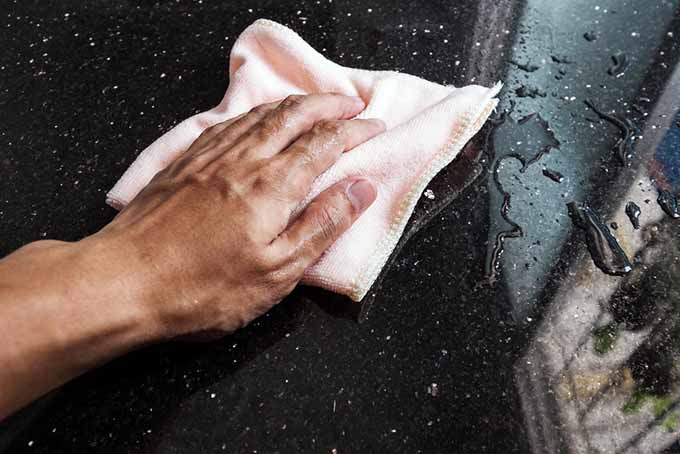
Glan an pláta dromchla eibhir roimh an calabrú. Doirt méid beag de ghlantóir pláta dromchla ar éadach glan, bog agus glan dromchla an eibhir. Triomaigh an glantóir láithreach den phláta dromchla le héadach tirim. Ná lig don leacht glantacháin triomú san aer.
Cuir tomhasaire tomhais arís agus arís eile ar lár an phláta dromchla eibhir.
Náidigh an tomhasaire athuair le dromchla an phláta eibhir.
Bog an tomhasaire go mall trasna dhromchla an eibhir. Féach ar tháscaire an tomhasaire agus taifead buaicphointí aon athruithe airde agus tú ag bogadh an ionstraim trasna an phláta.
Déan comparáid idir an t-athrú cothromaíochta trasna dhromchla an phláta agus na lamháltais do do phláta dromchla, a athraíonn bunaithe ar mhéid an phláta agus ar ghrád cothromaíochta an eibhir. Féach ar shonraíocht chónaidhme GGG-P-463c (féach Acmhainní) chun a fháil amach an gcomhlíonann do phláta na ceanglais chothromaíochta dá mhéid agus dá ghrád. Is é an t-athrú idir an pointe is airde ar an pláta agus an pointe is ísle ar an pláta a thomhas cothromaíochta.
Seiceáil go dtagann na hathruithe doimhneachta is mó ar dhromchla an phláta laistigh de na sonraíochtaí in-athdhéantachta do phláta den mhéid agus den ghrád sin. Féach ar shonraíocht chónaidhme GGG-P-463c (féach Acmhainní) chun a fháil amach an gcomhlíonann do phláta na ceanglais in-athdhéantachta dá mhéid. Diúltaigh don phláta dromchla mura gcomhlíonann fiú pointe amháin na ceanglais in-athdhéantachta.
Stop ag úsáid pláta dromchla eibhir nach gcomhlíonann ceanglais chónaidhme. Tabhair an pláta ar ais chuig an monaróir nó chuig cuideachta dromchla eibhir chun an bloc a athshnasú chun freastal ar na sonraíochtaí.
Leid
Déan calabrúcháin fhoirmiúla uair sa bhliain ar a laghad, cé gur cheart plátaí dromchla eibhir a bhfuil úsáid throm orthu a chalabrú níos minice.
Is minic a dhéanann dearbhú cáilíochta nó díoltóir seirbhísí calabrúcháin seachtracha calabrú foirmiúil, intaifeadta i dtimpeallachtaí déantúsaíochta nó cigireachta, cé gur féidir le duine ar bith tomhasaire tomhais athchleachtach a úsáid chun pláta dromchla a sheiceáil go neamhfhoirmiúil roimh úsáid.
Stair Luath na bPlátaí Dromchla Eibhir
Roimh an Dara Cogadh Domhanda, d'úsáid monaróirí Plátaí Dromchla Cruach chun iniúchadh tríthoiseach a dhéanamh ar chodanna. Le linn an Dara Cogadh Domhanda, mhéadaigh an gá le cruach go mór, agus leádh a lán Plátaí Dromchla Cruach. Bhí gá le hathsholáthar, agus ba é an t-ábhar roghnaithe Eibhear mar gheall ar a airíonna meitreolaíocha níos fearr.
Tháinig roinnt buntáistí a bhaineann le heibhear thar chruach chun solais. Tá eibhear níos deacra, cé go bhfuil sé níos sobhriste agus níos so-ghabhálaí do scealpadh. Is féidir leat eibhear a lapáil go dtí go mbeidh sé i bhfad níos cothromaí agus níos tapúla ná cruach. Tá an airí inmhianaithe ag eibhear freisin go bhfuil leathnú teirmeach níos ísle aige i gcomparáid le cruach. Ina theannta sin, dá mbeadh gá le deisiú a dhéanamh ar phláta cruach, b'éigean do cheardaithe é a scríobadh de láimh agus a gcuid scileanna a chur i bhfeidhm in atógáil uirlisí meaisín freisin.
Mar nóta taobh, tá roinnt Plátaí Dromchla Cruach fós in úsáid inniu.
Airíonna Meitreolaíocha Plátaí Eibhir
Is carraig thruaillithe í an eibhear a fhoirmítear le brúchtaí bolcánacha. I gcomparáid leis sin, is aolchloch mheiteamorfóisithe í marmar. Chun úsáide meitreolaíochta, ba cheart don eibhear a roghnaítear ceanglais shonracha a chomhlíonadh atá leagtha amach i Sonraíocht Chónaidhme GGG-P-463c, ar a dtugtar Sonraíochtaí Cónaidhme feasta, agus go sonrach, Cuid 3.1 3.1 I measc na Sonraíochtaí Cónaidhme, ba cheart go mbeadh uigeacht mhín go meánghráinneach ag eibhear.
Is ábhar crua é eibhear, ach athraíonn a chruas ar roinnt cúiseanna. Is féidir le teicneoir pláta eibhir a bhfuil taithí aige an cruas a mheas de réir a dhath, rud a léiríonn a ábhar grianchloch. Is airí í cruas eibhir a shainmhínítear go páirteach ag méid an ábhair grianchloch agus easpa mica. Is iad na heibhir dhearg agus bándearg is deacra de ghnáth, is iad na liatha is cruas meánach, agus is iad na dubha is boige.
Úsáidtear Modúl Leaisteachta Young chun solúbthacht nó léiriú ar chruas na cloiche a chur in iúl. Meánlíon na scálaí atá ag eibhear bándearg ná 3-5 phointe, ag liath 5-7 phointe agus ag dubh 7-10 phointe. Dá lú an uimhir, is deacra a bhíonn an t-eibhear. Dá mhéad an uimhir, is boige agus is solúbtha an t-eibhear. Tá sé tábhachtach cruas an Eibhir a bheith ar eolas agat agus tiús á roghnú agat atá riachtanach do ghráid lamháltais agus meáchan na gcodanna agus na dtomhasairí a chuirtear air.
Sna seanlaethanta nuair a bhí meaisínithe fíor ann, ar a dtugtar na leabhráin tábla trig ina bpócaí léine, measadh gurbh é an t-eibhear dubh “An ceann is fearr”. Sainmhíníodh an ceann is fearr mar an cineál a thug an fhriotaíocht is mó i gcoinne caitheamh nó atá níos deacra. Míbhuntáiste amháin is ea go mbíonn claonadh ag eibhear níos deacra scealpadh nó dingeadh níos éasca. Bhí meaisínithe chomh cinnte sin gurbh é an t-eibhear dubh an ceann is fearr gur dhathaigh roinnt monaróirí eibhir bándearg é dubh.
Chonaic mé féin pláta a thit de ardaitheoir forc nuair a bogadh é ón stóras. Bhuail an pláta an t-urlár agus scoilt sé ina dhá leath ag nochtadh an dath bándearg fíor. Bí cúramach má tá sé ar intinn agat eibhear dubh a cheannach as an tSín. Molaimid duit do chuid airgid a chur amú ar bhealach éigin eile. Is féidir le pláta eibhir a bheith éagsúil ó thaobh cruas de. Is féidir le stríoc grianchloch a bheith i bhfad níos deacra ná an chuid eile den phláta dromchla. Is féidir le sraith de gabbro dubh limistéar a dhéanamh i bhfad níos boige. Tá a fhios ag teicneoirí deisiúcháin plátaí dromchla dea-oilte, a bhfuil taithí acu conas déileáil leis na limistéir bhoga seo.
Gráid Phláta Dromchla
Tá ceithre ghrád plátaí dromchla ann. Grád Saotharlainne AA agus A, Grád Cigireachta Seomra B, agus an ceathrú grád ná Grád Ceardlainne. Is iad Gráid AA agus A na cinn is cothroime le lamháltais cothroime níos fearr ná 0.00001 orlach do phláta Grád AA. Is iad Gráid Cheardlainne na cinn is lú cothroime agus mar a thugann an t-ainm le fios, tá siad beartaithe lena n-úsáid i seomraí uirlisí. Ach tá Grád AA, Grád A agus Grád B beartaithe lena n-úsáid i saotharlann cigireachta nó rialaithe cáilíochta.
PTástáil Roper le haghaidh Calabrú Pláta Dromchla
Deirim i gcónaí le mo chustaiméirí gur féidir liom aon pháiste 10 mbliana d'aois a tharraingt amach as mo sheipéal agus a mhúineadh dóibh i gceann cúpla lá conas pláta a thástáil. Níl sé deacair. Éilíonn sé teicníc éigin chun an tasc a dhéanamh go tapa, teicnící a fhoghlaimíonn duine le himeacht ama agus go leor athrá. Ba chóir dom a chur in iúl duit, agus ní féidir liom a dhóthain béime a chur air, NACH nós imeachta calabrúcháin é Fed Spec GGG-P-463c! Tuilleadh faoi sin níos déanaí.
De réir Sonraíochtaí an Chúlchiste Feidearálach, is gá calabrú a dhéanamh ar sheiceálacha cothromaíochta foriomláin (Meánphain) agus in-athdhéantachta (caitheamh áitiúil). Is iad na plátaí beaga an t-aon eisceacht nach bhfuil ach in-athdhéantacht ag teastáil.
Chomh maith leis sin, agus chomh ríthábhachtach leis na tástálacha eile, tá an tástáil le haghaidh grádán teirmeach. (Féach Delta T thíos)
Fíor 1
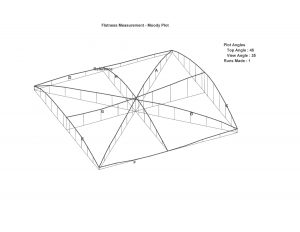
Tá 4 mhodh ceadaithe ag Tástáil Cothromaíochta. Leibhéil leictreonacha, uath-choilíniú, léasar agus gléas ar a dtugtar aimsitheoir plána. Ní úsáidimid leibhéil leictreonacha ach amháin mar is iad an modh is cruinne agus is tapúla ar roinnt cúiseanna.
Úsáideann léasair agus uath-choiliméirí léas solais an-dhíreach mar thagairt. Déantar tomhas díreachachta ar phláta dromchla eibhir trí chomparáid a dhéanamh idir an t-athrú san achar idir an pláta dromchla agus an léas solais. Trí léas díreach solais a thógáil, é a bhualadh ar sprioc frithchaiteora agus an sprioc frithchaiteora á bogadh síos an pláta dromchla, is tomhas díreachachta é an t-achar idir an léas a astaítear agus an léas fillte.
Seo an fhadhb atá leis an modh seo. Bíonn tionchar ag creathadh, teocht chomhthimpeallach, sprioc nach bhfuil cothrom nó scríobtha, éilliú san aer, agus gluaiseacht aeir (sruthanna) ar an sprioc agus ar an bhfoinse. Cuireann na rudaí seo go léir le comhpháirteanna breise earráide. Ina theannta sin, is mó an ranníocaíocht a dhéanann earráid oibreora ó sheiceálacha le huath-choiliméadair.
Is féidir le húsáideoir uath-choiliméadair a bhfuil taithí aige tomhais an-chruinne a dhéanamh ach bíonn fadhbanna aige fós maidir le comhsheasmhacht na léamha go háirithe thar achair níos faide mar go mbíonn claonadh ag na frithchaitheamh leathnú nó beagán doiléire. Chomh maith leis sin, bíonn earráidí breise mar thoradh ar sprioc nach bhfuil foirfe cothrom agus lá fada ag féachaint tríd an lionsa.
Is rud amaideach é gléas aimsitheora eitleáin. Úsáideann an gléas seo bealach díreach (i gcomparáid le léas solais coilimithe nó léasair thar a bheith díreach) mar thagairt. Ní hamháin go n-úsáideann an gléas meicniúil táscaire nach bhfuil ach taifeach 20 u orlach aige de ghnáth ach cuireann neamhdhíreachacht an bharra agus ábhair éagsúla go mór le hearráidí tomhais. Dar linne, cé go bhfuil an modh inghlactha, ní úsáidfeadh aon saotharlann inniúil gléas aimsithe eitleáin mar ionstraim cigireachta deiridh.
Úsáideann leibhéil leictreonacha domhantarraingt mar thagairt. Ní dhéanann creathadh difear do leibhéil leictreonacha difreálacha. Tá taifeach chomh híseal le .1 stua soicind acu agus tá na tomhais gasta, cruinn agus níl mórán earráide ann ó oibreoir a bhfuil taithí aige. Ní sholáthraíonn Aimsitheoirí Plána ná uath-choiliméirí plotaí topagrafacha (Fíor 1) ná isiméadracha (Fíor 2) den dromchla a ghintear ar ríomhaire.
Fíor 2
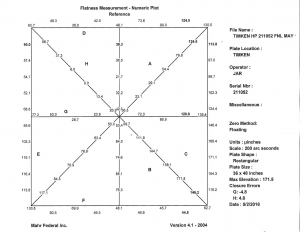
Tástáil ar Chomhréidheachas Ceart an Dromchla
Tá tástáil chothromúlachta cheart an dromchla chomh tábhachtach sin den pháipéar seo gur cheart dom é a chur ag an tús. Mar a luadh cheana, NÍ modh calabrúcháin É Sonraíocht Chónaidhme GGG-p-463c. Feidhmíonn sé mar threoir do go leor gnéithe de ghréibhear grád méadreolaíochta a bhfuil sé beartaithe ag aon Ghníomhaireacht Rialtais Chónaidhme a cheannach, agus áirítear leis sin na modhanna tástála agus na lamháltais nó na gráid. Má éilíonn conraitheoir gur chloígh siad le Sonraíochtaí Chónaidhme, ansin cinnfear an luach cothromúlachta de réir Mhodh Moody.
Fear ó na 1950idí ab ea Moody a cheap modh matamaiticiúil chun cothromaíocht iomlán a chinneadh agus chun treoshuíomh na línte a tástáladh a chur san áireamh, cibé acu an raibh siad sách gar don dá thaobh san eitleán céanna. Níl aon athrú tagtha. Rinne Allied Signal iarracht an modh matamaiticiúil a fheabhsú ach chinn siad go raibh na difríochtaí chomh beag sin nach raibh an iarracht fiúntach.
Má úsáideann conraitheoir pláta dromchla Leibhéil Leictreonacha nó léasar, úsáideann sé ríomhaire chun cabhrú leis na ríomhanna. Gan chúnamh ríomhaire, caithfidh an teicneoir a úsáideann uath-choilíniú na léamha a ríomh de láimh. I ndáiríre, ní dhéanann siad. Tógann sé ró-fhada agus, go hionraic, d'fhéadfadh sé a bheith ró-dúshlánach. I dtástáil cothromaíochta ag baint úsáide as Modh Moody, déanann an teicneoir tástáil ar ocht líne i gcumraíocht Union Jack le haghaidh díreachachta.
An Modh Moody
Is bealach matamaiticiúil é Modh Moody chun a chinneadh an bhfuil na hocht líne ar an eitleán céanna. Seachas sin, níl agat ach 8 líne dhíreacha a d'fhéadfadh a bheith ar an eitleán céanna nó in aice leis. Ina theannta sin, conraitheoir a mhaíonn go gcloíonn sé le Sonraíocht an Chódaire Feidearálaigh, agus a úsáideann uath-choilíniú, séní mórocht leathanach sonraí a ghiniúint. Leathanach amháin do gach líne a sheiceáiltear chun a thástáil, a dheisiú, nó an dá rud a chruthú. Seachas sin, níl aon tuairim ag an gconraitheoir cad é an fíorluach cothromaíochta.
Táim cinnte, mura bhfuil tú ar dhuine de na daoine sin a fhaigheann do phlátaí calabraithe ag conraitheoir ag baint úsáide as uath-choilíniú, nach bhfaca tú na leathanaigh sin riamh! Is sampla de seo é Fíor 3.ceann amháinleathanach ocht riachtanach chun an cothromaíocht fhoriomlán a ríomh. Comhartha amháin den aineolas agus den mhailís sin ná má tá uimhreacha slánaithe deasa i do thuairisc. Mar shampla, 200, 400, 650, etc. Is uimhir fhíor luach atá ríofa i gceart. Mar shampla 325.4 u In. Nuair a úsáideann an conraitheoir Modh Moody na ríomhanna, agus nuair a ríomhann an teicneoir na luachanna de láimh, ba cheart duit ocht leathanach de ríomhanna agus plota isiméadrach a fháil. Taispeánann an plota isiméadrach na hairde éagsúla feadh na línte éagsúla agus cé mhéad achair atá idir na pointí trasnaithe roghnaithe.
Fíor 3(Tógann sé ocht leathanach mar seo chun cothromaíocht a ríomh de láimh. Bí cinnte a fhiafraí cén fáth nach bhfuil tú ag fáil seo má úsáideann do chonraitheoir uath-choilíniú!)
Fíor 4
Úsáideann teicneoirí Tomhsairí Toiseacha leibhéil difreálacha (Fíor 4) mar fheistí is fearr leo chun na hathruithe beaga in uillinneacht a thomhas ó stáisiún tomhais go stáisiún. Tá taifeach síos go dtí .1 stua soicind ag na leibhéil (5 u Orlach ag baint úsáide as sled 4″), tá siad thar a bheith cobhsaí, ní bhíonn tionchar ag creathadh, achair tomhaiste, sruthanna aeir, tuirse oibreora, éilliú aeir ná aon cheann de na fadhbanna atá i bhfeistí eile orthu. Cuir cúnamh ríomhaire leis, agus éiríonn an tasc sách gasta, ag giniúint plotaí topagrafacha agus isiméadracha a chruthaíonn an fíorú agus, thar aon rud eile, an deisiú.
Tástáil Athdhéantachta Chuí
Is é an léamh athuair nó an in-athdhéantacht an tástáil is tábhachtaí. Is daingneán léitheoireachta athuair, LVDT agus aimplitheoir atá riachtanach le haghaidh léamha ardtaifigh an trealamh a úsáidimid chun an tástáil in-athdhéantachta a dhéanamh. Socraímid an aimplitheoir LVDT go dtí réiteach íosta de 10 u Orlach nó 5 u Orlach le haghaidh plátaí ardchruinnis.
Is fiú gan táscaire meicniúil a úsáid le taifeach 20 orlach amháin má tá tú ag iarraidh tástáil a dhéanamh ar riachtanas in-athdhéantachta de 35 orlach. Tá éiginnteacht 40 orlach ag táscairí! Déanann an socrú léitheoireachta athdhéanta aithris ar chumraíocht tomhsaire airde/cuid.
NÍ hionann in-athdhéantacht agus cothromaíocht fhoriomlán (Meánphlána). Is maith liom smaoineamh ar in-athdhéantacht in eibhear mar thomhas ga comhsheasmhach.
Fíor 5
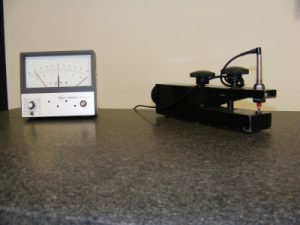
Má dhéanann tú tástáil ar inathdhéanamh liathróide cruinn, ansin tá sé léirithe agat nach bhfuil ga na liathróide athraithe. (Tá cruth coróineach dronnach ag próifíl idéalach pláta atá deisithe i gceart.) Mar sin féin, is léir nach bhfuil an liathróid cothrom. Bhuel, cineál. Ar achar an-ghearr, tá sí cothrom. Ós rud é go mbíonn tomhas airde an-ghar don chuid i gceist leis an gcuid is mó den obair chigireachta, is í an inathdhéanamh an airí is tábhachtaí de phláta eibhir. Tá sé níos tábhachtaí ná an cothrom iomlán mura bhfuil úsáideoir ag seiceáil díreachacht cuid fhada.
Bí cinnte go ndéanann do chonraitheoir tástáil léite athuair. Is féidir le pláta léamh athuair a bheith aige atá i bhfad níos faide ná an chaoinfhulaingt ach tástáil chomhréidhe a rith fós! Is ionadh an rud é gur féidir le saotharlann creidiúnú a fháil i dtástáil nach n-áirítear tástáil léite athuair. Is fearr le saotharlann nach féidir léi deisiú a dhéanamh nó nach bhfuil an-mhaith ag deisiú tástáil chomhréidhe amháin a dhéanamh. Is annamh a athraíonn an chomhréidh mura mbogann tú an pláta.
Is é an tástáil léite athuair an ceann is fusa a thástáil ach an ceann is deacra a bhaint amach agus tú ag lapáil. Déan cinnte gur féidir le do chonraitheoir in-athdhéantacht a athbhunú gan an dromchla a “mhilleadh” ná tonnta a fhágáil sa dromchla.
Tástáil Delta T
Baineann an tástáil seo le teocht iarbhír na cloiche a thomhas ag a dromchla uachtarach agus a dromchla bun agus an difríocht, Delta T, a ríomh chun tuairisciú ar an deimhniú.
Tá sé tábhachtach a fhios a bheith agat gurb é 3.5 uIn/Orlach/céim an chomhéifeacht leathnaithe teirmeach meánach in eibhear. Is beag tionchar a bhíonn ag teochtaí agus taise comhthimpeallacha ar phláta eibhir. Mar sin féin, is féidir le pláta dromchla dul thar an gcaoinfhulaingt nó feabhas a chur air uaireanta fiú má tá Delta T .3 – .5 céim F ann. Is gá a fhios a bheith agat an bhfuil an Delta T laistigh de .12 céim F ón áit a raibh an difreálach ón gcalabrú deireanach.
Tá sé tábhachtach a fhios freisin go n-imíonn dromchla oibre pláta i dtreo an teasa. Má tá an teocht uachtarach níos teo ná an teocht bun, ansin ardaíonn an dromchla uachtarach. Má tá an bun níos teo, rud a tharlaíonn go hannamh, ansin titeann an dromchla uachtarach. Ní leor do bhainisteoir cáilíochta nó do theicneoir a fhios a bheith acu go bhfuil an pláta cothrom agus in-athdhéanta tráth an chalabrúcháin nó an deisiúcháin ach cad a bhí a Delta T tráth an tástála calabrúcháin deiridh. I gcásanna criticiúla, is féidir le húsáideoir, tríd an Delta T a thomhas é féin, a chinneadh an bhfuil pláta imithe thar an lamháltas mar gheall ar athruithe Delta T amháin. Ar ámharaí an tsaoil, tógann sé go leor uaireanta nó fiú laethanta ar eibhear dul i dtaithí ar thimpeallacht. Ní bheidh tionchar ag luaineachtaí beaga i dteocht chomhthimpeallach i rith an lae air. Ar na cúiseanna seo, ní thuairiscímid teocht nó taise calabrúcháin chomhthimpeallach toisc go bhfuil na héifeachtaí neamhbhríoch.
Caitheamh Pláta Eibhir
Cé go bhfuil eibhear níos deacra ná plátaí cruach, bíonn spotaí ísle fós ar an dromchla ar eibhear. Is é gluaiseacht athchleachtach páirteanna agus tomhasairí ar an pláta dromchla an fhoinse is mó caitheamh, go háirithe má tá an limistéar céanna in úsáid i gcónaí. Luasghéadaíonn salachar agus deannach meilt a ligtear fanacht ar dhromchla pláta an próiseas caitheamh agus é ag dul idir páirteanna nó tomhasairí agus dromchla an eibhir. Agus páirteanna agus tomhasairí á mbogadh trasna a dhromchla, is gnách gurb é deannach scríobach is cúis le caitheamh breise. Molaim go láidir glanadh leanúnach chun caitheamh a laghdú. Tá caitheamh feicthe againn ar phlátaí de bharr seachadtaí pacáistí laethúla UPS a chuirtear ar bharr plátaí! Bíonn tionchar ag na limistéir áitiúla caitheamh sin ar léamha na tástála in-athdhéantachta calabrúcháin. Seachain caitheamh trí ghlanadh go rialta.
Glanadh Pláta Eibhir
Chun an pláta a choinneáil glan, bain úsáid as éadach greamaitheach chun an salachar a bhaint. Brúigh go han-éadrom, ionas nach bhfágann tú iarmhar gliú. Déanann éadach greamaitheach dea-úsáidte jab iontach maidir le deannach meilte a bhailiú idir ghlanadh. Ná hoibrigh san áit chéanna. Bog do shocrú timpeall an phláta, ag dáileadh an chaitheamh. Tá sé ceart go leor alcól a úsáid chun pláta a ghlanadh, ach bíodh a fhios agat go bhfuaróidh sé sin an dromchla go sealadach. Tá uisce le méid beag gallúnaí den scoth. Tá na glantóirí atá ar fáil go tráchtála ar nós glantóir Starrett den scoth le húsáid freisin, ach déan cinnte go mbainfidh tú an t-iarmhar gallúnaí go léir den dromchla.
Deisiú Pláta Eibhir
Ba chóir go mbeadh sé soiléir anois an tábhacht a bhaineann le cinntiú go ndéanann do chonraitheoir pláta dromchla calabrú inniúil. Is annamh a bhíonn teicneoir ag na saotharlanna de chineál “Clearing House” a thairgeann cláir “Déan gach rud le glao amháin” ar féidir leo deisiúcháin a dhéanamh. Fiú má thairgeann siad deisiúcháin, ní bhíonn teicneoir acu i gcónaí a bhfuil an taithí riachtanach aige nuair a bhíonn an pláta dromchla go mór lasmuigh den chaoinfhulaingt.
Má deirtear leat nach féidir pláta a dheisiú mar gheall ar chaitheamh mór, glaoigh orainn. Is dóichí gur féidir linn an deisiú a dhéanamh.
Oibríonn ár dteicneoirí printíseacht bliana go bliain go leith faoi Mháistir-Theicneoir Pláta Dromchla. Sainmhínímid Máistir-Theicneoir Pláta Dromchla mar dhuine a bhfuil a bprintíseacht críochnaithe aige agus a bhfuil breis agus deich mbliana breise taithí aige i gcalabrú agus i ndeisiú Plátaí Dromchla. Tá triúr Máistir-Theicneoirí ar fhoireann againn ag Dimensional Gauge a bhfuil breis agus 60 bliain taithí acu le chéile. Tá duine dár Máistir-Theicneoirí ar fáil i gcónaí le haghaidh tacaíochta agus treorach nuair a thagann cásanna deacra chun cinn. Tá taithí ag ár dteicneoirí go léir i gcalabrú plátaí dromchla de gach méid, ó bheag go mór, i ndálaí comhshaoil éagsúla, i dtionscail éagsúla, agus i bhfadhbanna móra caitheamh.
Tá riachtanas bailchríoch sonrach de 16 go 64 Garbhacht Uimhríochta Meánach (AA) ag Sonraíochtaí Cónaidhme. Is fearr linn bailchríoch sa raon 30-35 AA. Tá go leor garbhachta ann chun a chinntiú go mbogann na codanna agus na tomhasairí go réidh agus nach ngreamaíonn siad ná nach bhfásann siad leis an pláta dromchla.
Nuair a dhéanaimid deisiú, déanaimid iniúchadh ar an pláta le haghaidh feistiú agus leibhéal ceart. Úsáidimid modh laipeála tirim, ach i gcásanna caitheamh mhór a éilíonn baint shuntasach eibhir, déanaimid laipeáil fhliuch. Glanann ár dteicneoirí suas ina ndiaidh féin, bíonn siad críochnúil, gasta agus beacht. Tá sé sin tábhachtach mar go n-áirítear d’am neamhghníomhach agus do tháirgeacht caillte i gcostas seirbhíse pláta eibhir. Tá deisiú inniúil ríthábhachtach, agus níor cheart duit conraitheoir a roghnú riamh bunaithe ar phraghas ná ar áisiúlacht. Éilíonn roinnt oibre calabrúcháin daoine aonair an-oilte. Tá sin againn.
Tuarascálacha Calabrúcháin Deiridh
Maidir le gach deisiú agus calabrú pláta dromchla, soláthraímid tuarascálacha gairmiúla mionsonraithe. Tá méid suntasach faisnéise ríthábhachtach agus ábhartha inár dtuarascálacha. Éilíonn Fed Spec. an chuid is mó den fhaisnéis a chuireamar ar fáil. Seachas iad siúd atá i gcaighdeáin cháilíochta eile amhail ISO/IEC-17025, is iad seo a leanas na Sonraíochtaí Fed. íosta do thuarascálacha:
- Méid i dTr. (X' x X')
- Dath
- Stíl (Tagraíonn sé seo do leaca gan teanntáin nó dhá nó ceithre leaca)
- Modúl Leaisteachais Measta
- Meánfhulaingt Eitleáin (Cinnte de réir Grád/Méid)
- Lamháltas Léitheoireachta Athuair (Cinnte de réir fad trasnánach in orlaigh)
- Meánphlána mar a aimsíodh é
- Meánphlána ar chlé
- Déan an léamh arís mar a fuarthas é
- Déan an léamh arís mar atá ar chlé
- Delta T (Difreálach teochta idir dhromchlaí uachtaracha agus íochtaracha)
Más gá don teicneoir obair lapála nó deisiúcháin a dhéanamh ar an pláta dromchla, bíonn plota topagrafach nó isiméadrach ag gabháil leis an deimhniú calabrúcháin chun deisiú bailí a chruthú.
Focal faoi Chreidiúnuithe ISO/IEC-17025 agus na saotharlanna a bhfuil siad acu
Ní chiallaíonn sé go bhfuil a fhios ag saotharlann i gcalabrú plátaí dromchla go bhfuil a fhios acu cad atá á dhéanamh acu, gan trácht ar é a dhéanamh i gceart! Ní chiallaíonn sé sin go bhfuil an saotharlann in ann deisiú a dhéanamh ach an oiread. Ní dhéanann na comhlachtaí creidiúnaithe idirdhealú idir fíorú agus calabrú (deisiú).Aagus tá aithne agam ar cheann amháin, b'fhéidir2comhlachtaí creidiúnaithe a dhéanfaidhLceangalAribín timpeall mo mhadra dá n-íocfainn dóthain airgid leo! Is fíric bhrónach í. Chonaic mé saotharlanna ag fáil creidiúnaithe trí cheann amháin de na trí thástáil riachtanacha a dhéanamh. Thairis sin, chonaic mé saotharlanna ag fáil creidiúnaithe le neamhchinnteachtaí neamhréadúla agus ag fáil creidiúnaithe gan aon chruthúnas ná taispeántas ar an gcaoi ar ríomh siad na luachanna. Is trua é sin ar fad.
achoimre
Ní féidir leat ról plátaí eibhir beachtais a mheas faoina luach. Is é an tagairt chomhréidh a sholáthraíonn plátaí eibhir an bunús ar a ndéanann tú na tomhais eile go léir.
Is féidir leat na huirlisí tomhais is nua-aimseartha, is cruinne agus is ilúsáidí a úsáid. Mar sin féin, tá sé deacair tomhais chruinne a fháil amach mura bhfuil an dromchla tagartha cothrom. Uair amháin, dúirt custaiméir ionchasach liom “bhuel, níl ann ach carraig!” Mo fhreagra, “Ceart go leor, tá an ceart agat, agus ní féidir leat a chosaint ar chor ar bith go dtiocfadh saineolaithe isteach chun do phlátaí dromchla a chothabháil.”
Ní cúis mhaith riamh é an praghas chun conraitheoirí pláta dromchla a roghnú. Ní thuigfidh ceannaitheoirí, cuntasóirí agus líon scanrúil innealtóirí cáilíochta i gcónaí nach bhfuil athdheimhniú plátaí eibhir cosúil le hathdheimhniú micriméadar, caliper nó DMM.
Éilíonn roinnt ionstraimí saineolas, ní praghas íseal. Tar éis sin a rá, tá ár rátaí an-réasúnta. Go háirithe chun muinín a bheith agat go ndéanaimid an obair i gceart. Téimid i bhfad níos faide ná ceanglais ISO-17025 agus Sonraíochtaí Cónaidhme i dtaca le breisluach.
Is iad plátaí dromchla bunús go leor tomhas tríthoiseach, agus tá sé riachtanach aire cheart a thabhairt do do phláta dromchla chun cruinneas tomhais a chinntiú.
Is é eibhear an t-ábhar is mó a úsáidtear le haghaidh plátaí dromchla mar gheall ar a thréithe fisiceacha idéalacha, amhail cruas dromchla agus íogaireacht íseal do luaineachtaí teochta. Mar sin féin, bíonn caitheamh ar phlátaí dromchla le húsáid leanúnach.
Is gnéithe ríthábhachtacha iad cothrom agus in-athdhéantacht araon chun a chinneadh an soláthraíonn pláta dromchla beacht chun tomhais chruinne a fháil. Sainmhínítear na lamháltais don dá ghné faoin tSonraíocht Chónaidhme GGG-P-463C, DIN, GB, JJS... Is éard atá i gcothrom ná tomhas an achair idir an pointe is airde (plána an dín) agus an pointe is ísle (plána an bhoinn) ar an pláta. Cinneann in-athdhéantacht an féidir tomhas a tógadh ó limistéar amháin a athdhéanamh ar fud an phláta ar fad laistigh den lamháltas luaite. Cinntíonn sé seo nach bhfuil aon bhuaiceanna ná gleannta sa phláta. Mura bhfuil na léamha laistigh de na treoirlínte luaite, d’fhéadfadh go mbeadh gá le hathdhromchlú chun na tomhais a thabhairt ar ais isteach sa tsonraíocht.
Tá calabrú rialta pláta dromchla riachtanach chun cothromaíocht agus in-athdhéantacht a chinntiú le himeacht ama. Tá creidiúnú ISO 17025 ag an ngrúpa tomhais beachtais ag Cross chun cothromaíocht agus in-athdhéantacht pláta dromchla a chalabrú. Bainimid úsáid as Córas Deimhniúcháin Pláta Dromchla Mahr ina bhfuil:
- Anailís Giúmar agus Próifíle,
- Plotaí Isiméadracha nó Uimhriúla,
- Meán Il-Rith, agus
- Grádú Uathoibríoch de réir Chaighdeáin an Tionscail.
Cinneann Samhail Ríomhchuidithe Mahr aon diall uilleach nó líneach ón leibhéal absalóideach, agus tá sé oiriúnach go hidéalach chun próifíliú an-chruinn a dhéanamh ar phlátaí dromchla.
Beidh eatraimh idir calabrúcháin éagsúil ag brath ar mhinicíocht úsáide, na coinníollacha comhshaoil ina bhfuil an pláta suite, agus riachtanais cháilíochta shonracha do chuideachta. Má chothabhálann tú do phláta dromchla i gceart, d’fhéadfadh sé go mbeadh eatraimh níos faide idir gach calabrú, rud a chabhraíonn leat an costas breise a bhaineann le hath-chalabrú a sheachaint, agus thar aon rud eile, cinntíonn sé go bhfuil na tomhais a fhaigheann tú ar an pláta chomh cruinn agus is féidir. Cé go bhfuil cuma láidir ar phlátaí dromchla, is ionstraimí beachta iad agus ba chóir iad a chóireáil dá réir. Seo roinnt rudaí le breithniú maidir le cúram a thabhairt do do phlátaí dromchla:
- Coinnigh an pláta glan, agus más féidir clúdaigh é nuair nach bhfuil sé in úsáid
- Níor cheart aon rud a chur ar an pláta seachas tomhais nó píosaí le tomhas.
- Ná húsáid an áit chéanna ar an pláta i gcónaí.
- Más féidir, rothlaigh an pláta go tréimhsiúil.
- Tabhair meas ar theorainn ualaigh do phláta
Is féidir le Bonn Eibhir Beachtas Feabhsú a dhéanamh ar Fheidhmíochtaí Uirlisí Meaisín
Tá na riachtanais ag méadú i gcónaí san innealtóireacht mheicniúil i gcoitinne agus i dtógáil uirlisí meaisín go háirithe. Is dúshláin leanúnacha iad an cruinneas agus na luachanna feidhmíochta uasta a bhaint amach gan costais a mhéadú chun a bheith iomaíoch. Is fachtóir cinntitheach é leaba na n-uirlisí meaisín anseo. Dá bhrí sin, tá níos mó agus níos mó monaróirí uirlisí meaisín ag brath ar eibhear. Mar gheall ar a pharaiméadair fhisiciúla, cuireann sé buntáistí soiléire ar fáil nach féidir a bhaint amach le cruach nó coincréit polaiméire.
Is carraig dhomhain bholcánach í an eibhear mar a thugtar uirthi agus tá struchtúr an-dlúth agus aonchineálach aici le comhéifeacht leathnúcháin thar a bheith íseal, seoltacht theirmeach íseal agus maolú ard creatha.
Anseo thíos gheobhaidh tú amach cén fáth a bhfuil an tuairim choitianta nach bhfuil eibhear oiriúnach ach mar bhonn meaisín do mheaisíní tomhais chomhordanáidí ardleibhéil as dáta le fada agus cén fáth gur rogha an-bhuntáisteach é an t-ábhar nádúrtha seo mar bhonn uirlisí meaisín seachas cruach nó iarann teilgthe fiú le haghaidh uirlisí meaisín ardchruinneas.
Is féidir linn comhpháirteanna eibhir a mhonarú le haghaidh gluaiseachta dinimiciúla, comhpháirteanna eibhir do mhótair líneacha, comhpháirteanna eibhir do ndt, comhpháirteanna eibhir do x-gha, comhpháirteanna eibhir do cmm, comhpháirteanna eibhir do cnc, cruinneas eibhir do léasar, comhpháirteanna eibhir d'aeraspás, comhpháirteanna eibhir do stáitsí beachtais...
Ardluach Breise Gan Chostais Bhreise
Ní mar gheall ar an méadú ollmhór ar phraghas cruach atá an méadú atá tagtha ar úsáid eibhir san innealtóireacht mheicniúil. Ina áit sin, is amhlaidh atá sé toisc gur féidir an breisluach a bhaintear amach don uirlis mheaisín le leaba meaisín déanta as eibhir ar chostas an-bheag nó ar chor ar bith. Cruthaítear é seo le comparáidí costais monaróirí uirlisí meaisín aitheanta sa Ghearmáin agus san Eoraip.
Ní féidir an gnóthachan suntasach i gcobhsaíocht theirmidinimiciúil, maolú creatha agus cruinneas fadtéarmach a bhaineann le heibhear a bhaint amach le leaba iarainn teilgthe nó cruach, nó ar chostas réasúnta ard amháin. Mar shampla, is féidir le hearráidí teirmeacha suas le 75% d’earráid iomlán meaisín a chuntas, agus is minic a dhéantar iarracht cúiteamh a dhéanamh trí bhogearraí - le rath measartha. Mar gheall ar a sheoltacht theirmeach íseal, is é eibhear an bunús is fearr le haghaidh cruinneas fadtéarmach.
Le lamháltas 1 μm, comhlíonann eibhear go héasca na ceanglais chomhréidhe de réir DIN 876 don chéim chruinnis 00. Le luach 6 ar an scála cruas 1 go 10, tá sé thar a bheith crua, agus lena mheáchan sonrach de 2.8g/cm³ sroicheann sé beagnach luach an alúmanaim. Mar thoradh air sin, tá buntáistí breise ann freisin amhail rátaí beatha níos airde, luasghéaruithe ais níos airde agus síneadh ar shaolré na huirlise le haghaidh uirlisí meaisín gearrtha. Dá bhrí sin, bogann an t-athrú ó leaba teilgthe go leaba meaisín eibhir an uirlis meaisín atá i gceist isteach sa rang ardleibhéil i dtéarmaí cruinneas agus feidhmíochta - gan aon chostas breise.
Lorg Éiceolaíoch Feabhsaithe Eibhir
I gcodarsnacht le hábhair ar nós cruach nó iarann teilgthe, ní gá cloch nádúrtha a tháirgeadh le go leor fuinnimh agus le breiseáin. Ní theastaíonn ach méideanna beaga fuinnimh le haghaidh cairéalaithe agus cóireála dromchla. Mar thoradh air sin, tá lorg éiceolaíoch níos fearr ann, a sháraíonn lorg cruach mar ábhar fiú ag deireadh shaolré meaisín. Is féidir an leaba eibhir a bheith mar bhunús do mheaisín nua nó is féidir í a úsáid chun críocha go hiomlán difriúil ar nós mionú le haghaidh tógála bóithre.
Níl aon ghanntanas acmhainní ann le haghaidh eibhear ach an oiread. Is carraig dhomhain í atá déanta as magma laistigh de screamh an domhain. Tá sí 'aibithe' le milliúin bliain agus tá sí ar fáil i gcainníochtaí an-mhóra mar acmhainn nádúrtha ar bheagnach gach mór-roinn, an Eoraip ar fad san áireamh.
Conclúid: Tugann na buntáistí iomadúla inléirithe a bhaineann le heibhir i gcomparáid le cruach nó iarann teilgthe údar leis an bhfonn méadaitheach atá ar innealtóirí meicniúla an t-ábhar nádúrtha seo a úsáid mar bhunús d’uirlisí meaisín ardchruinneas, ardfheidhmíochta. Is féidir faisnéis mhionsonraithe faoi airíonna eibhir, atá buntáistí d’uirlisí meaisín agus d’innealtóireacht mheicniúil, a fháil san alt breise seo.
Is tomhas ar limistéir chomhréidhe áitiúla é tomhas athdhéanta. Deir an tsonraíocht Tomhais Athdhéanta go ndéanfar tomhas a dhéantar áit ar bith ar dhromchla pláta a athdhéanamh laistigh den chaoinfhulaingt shonraithe. Ráthaíonn rialú níos doichte ar chomhréidhe an limistéir áitiúil ná ar an gcomhréidhe iomlán athrú de réir a chéile ar phróifíl chomhréidhe an dromchla agus dá bhrí sin íoslaghdaítear earráidí áitiúla.
Cloíonn formhór na monaróirí, lena n-áirítear brandaí allmhairithe, leis an tSonraíocht Chónaidhme maidir le lamháltais chomhréidhe foriomlána ach déanann go leor acu neamhaird ar na tomhais athdhéanta. Ní ráthaíonn go leor de na plátaí ar luach íseal nó buiséid atá ar fáil ar an margadh inniu tomhais athdhéanta. NÍL monaróir nach ráthaíonn tomhais athdhéanta ag táirgeadh plátaí a chomhlíonann ceanglais ASME B89.3.7-2013 nó Sonraíocht Chónaidhme GGG-P-463c, nó DIN 876, GB, JJS...
Tá an dá rud ríthábhachtach chun dromchla beacht a chinntiú le haghaidh tomhais chruinne. Ní leor sonraíocht cothromaíochta ina haonar chun cruinneas tomhais a ráthú. Mar shampla, pláta dromchla Cigireachta Grád A 36 X 48, nach gcomhlíonann ach an tsonraíocht cothromaíochta de .000300". Má dhroicheann an píosa atá á sheiceáil roinnt buaicphointí, agus má tá an tomhasaire atá in úsáid i bpointe íseal, d'fhéadfadh an earráid tomhais a bheith chomh hard leis an lamháltas iomlán in aon limistéar amháin, 000300". Go deimhin, is féidir leis a bheith i bhfad níos airde má tá an tomhasaire ag luí ar fhána claonta.
Is féidir earráidí de .000600"-.000800" a bheith ann, ag brath ar dhéine an fhána, agus fad láimhe an tomhais atá in úsáid. Dá mbeadh sonraíocht Aththomhais de .000050"FIR ag an pláta seo, bheadh an earráid tomhais níos lú ná .000050" beag beann ar an áit ar an pláta a thógtar an tomhas. Fadhb eile, a thagann chun cinn de ghnáth nuair a dhéanann teicneoir neamhoilte iarracht pláta a athdhromchlú ar an láthair, is ea úsáid Tomhais Athdhéanta amháin chun pláta a dheimhniú.
NÍL na hionstraimí a úsáidtear chun in-athdhéantacht a fhíorú deartha chun cothromaíocht iomlán a sheiceáil. Nuair a shocraítear iad go náid ar dhromchla cuartha foirfe, leanfaidh siad de náid a léamh, bíodh an dromchla sin cothrom go foirfe nó cónascach nó dronnach 1/2"! Ní dhéanann siad ach aonfhoirmeacht an dromchla a fhíorú, ní an chothromaíocht. Ní chomhlíonann ach pláta a chomhlíonann an tsonraíocht cothromaíochta AGUS an tsonraíocht tomhais athdhéanta ceanglais ASME B89.3.7-2013 nó Sonraíocht Chónaidhme GGG-P-463c i ndáiríre.
Ask us about or flatness specification and repeat measurement promise by calling +86 19969991659 or emailing INFO@ZHHIMG.COM
Sea, ach ní féidir iad a ráthú ach amháin i gcás grádán teochta ingearach ar leith. D’fhéadfadh tionchar leathnú teirmeach ar an pláta athrú cruinneas níos mó ná an lamháltas a chur faoi deara go héasca má bhíonn athrú sa ghrádán. I gcásanna áirithe, má tá an lamháltas daingean go leor, is féidir leis an teas a ionsúitear ó shoilsiú lastuas athrú grádáin leordhóthanach a chur faoi deara thar roinnt uaireanta an chloig.
Tá comhéifeacht leathnú teirmeach de thart ar .0000035 orlach in aghaidh an orlaigh in aghaidh 1°F ag eibhear. Mar shampla: Tá cruinneas .000075" (1/2 de Ghrád AA) ag pláta dromchla 36" x 48" x 8" ag grádán 0°F, bíonn an teocht chéanna ag an mbarr agus ag an mbun. Má théann barr an phláta suas go dtí an pointe ina bhfuil sé 1°F níos teo ná an bun, athróidh an cruinneas go .000275" dronnach! Dá bhrí sin, níor cheart pláta a ordú le lamháltas níos doichte ná Grád Saotharlainne AA a bhreithniú ach amháin má tá rialú aeráide leordhóthanach ann.
Ba chóir pláta dromchla a thacú ag 3 phointe, suite go hidéalach 20% den fhad isteach ó fhoircinn an phláta. Ba chóir dhá thaca a bheith suite 20% den leithead isteach ó na taobhanna fada, agus ba chóir an tacaíocht atá fágtha a bheith lárnaithe. Ní féidir ach le 3 phointe luí go daingean ar aon rud seachas dromchla beacht.
Ba chóir an pláta a thacú ag na pointí seo le linn an táirgthe, agus níor chóir é a thacú ach ag na trí phointe seo agus é in úsáid. Má dhéantar iarracht an pláta a thacú ag níos mó ná trí phointe, gheobhaidh an pláta a thacaíocht ó chomhcheangail éagsúla de thrí phointe, nach mbeidh mar na trí phointe chéanna ar a raibh sé tacaithe le linn an táirgthe. Tabharfaidh sé seo earráidí isteach de réir mar a chlaonann an pláta chun cloí leis an socrú tacaíochta nua. Tá bíomaí tacaíochta ag gach seastán cruach zhhimg atá deartha chun ailíniú leis na pointí tacaíochta cearta.
Má tá an pláta tacaithe i gceart, níl gá le leibhéalú beacht ach amháin má éilíonn d’fheidhmchlár é. Ní gá leibhéalú chun cruinneas pláta atá tacaithe i gceart a choinneáil.
Cén fáth a roghnófá eibhir le haghaidhBunáiteanna MeaisínagusComhpháirteanna Meitreolaíochta?
Is é an freagra 'tá' do bheagnach gach feidhmchlár. I measc na mbuntáistí a bhaineann le heibhir tá: Gan meirg ná creimeadh, beagnach díolmhaithe ó chasadh, gan aon chnapán cúitimh nuair a bhíonn sé scoilte, saolré caitheamh níos faide, gníomh níos míne, cruinneas níos mó, beagnach neamh-mhaighnéadach, comhéifeacht íseal leathnúcháin theirmigh, agus costas cothabhála íseal.
Is cineál carraige bruitíneach é eibhear a bhaintear as a neart, a dhlús, a marthanacht agus a fhriotaíocht i gcoinne creimeadh. Ach tá eibhear an-ildánach freisin - ní hamháin le haghaidh cearnóga agus dronuilleoga atá sé! Déanta na fírinne, oibríonn Starrett Tru-Stone go muiníneach le comhpháirteanna eibhir atá innealtóireachta i gcruthanna, uillinneacha agus cuartha de gach cineál go rialta - le torthaí den scoth.
Trí ár bpróiseáil den scoth, is féidir dromchlaí gearrtha a bheith thar a bheith cothrom. Fágann na cáilíochtaí seo gur ábhar idéalach é eibhear chun bunanna meaisín agus comhpháirteanna meitreolaíochta de mhéid saincheaptha agus de dhearadh saincheaptha a chruthú. Is é an eibhear:
inmheaisínithe
go beacht cothrom nuair a ghearrtar agus a chríochnaítear é
frithsheasmhach in aghaidh meirge
buan
buan
Tá comhpháirteanna eibhir éasca le glanadh freisin. Agus dearaí saincheaptha á gcruthú agat, bí cinnte eibhir a roghnú mar gheall ar a buntáistí sármhaithe.
CAIGHDEÁIN/ FEIDHMEANNA ARDCHAITHEAMH
Tá cion ard grianchloch sa ghloine a úsáideann ZhongHui dár dtáirgí pláta dromchla caighdeánach, rud a sholáthraíonn friotaíocht níos fearr i gcoinne caitheamh agus damáiste. Tá rátaí ísle ionsúcháin uisce ag ár ndathanna Superior Black agus Crystal Pink, rud a laghdaíonn an seans go meirgeoidh do thomhais bheachtais agus iad á socrú ar na plátaí. Mar thoradh ar na dathanna eibhir a thairgeann ZhongHui, bíonn níos lú glare ann, rud a chiallaíonn níos lú brú súl do dhaoine aonair a úsáideann na plátaí. Roghnaíomar ár gcineálacha eibhir agus leathnú teirmeach á chur san áireamh againn d’fhonn an ghné seo a choinneáil chomh híseal agus is féidir.
FEIDHMEÁIN SAINCHEAPTA
Nuair a bhíonn pláta le cruthanna saincheaptha, iontrálacha snáithithe, sliotáin nó meaisínithe eile ag teastáil le haghaidh d’fheidhmchláir, ba mhaith leat ábhar cosúil le Black Diabase a roghnú. Cuireann an t-ábhar nádúrtha seo dolúbthacht níos fearr, maolú creathadh den scoth, agus inmheaisínteacht fheabhsaithe ar fáil.
Sea, mura bhfuil siad caite ró-dhona. Ligeann ár socruithe monarchan agus ár dtrealamh na coinníollacha is fearr le haghaidh calabrú ceart pláta agus athoibriú más gá. Go ginearálta, má tá pláta laistigh de .001" den lamháltas riachtanach, is féidir é a athdhromchlú ar an láthair. Má tá pláta caite go dtí an pointe go bhfuil sé níos mó ná .001" lasmuigh den lamháltas, nó má tá sé pollta nó scoilte go dona, ansin beidh gá é a sheoladh chuig an monarcha le haghaidh meilt sula ndéanfar athlipáil air.
Ba chóir a bheith an-chúramach agus teicneoir calabrúcháin agus athdhromchlaithe ar an láthair á roghnú agat. Molaimid duit a bheith cúramach agus do sheirbhís calabrúcháin á roghnú agat. Iarr creidiúnú agus fíoraigh go bhfuil calabrú inrianaithe ag an Institiúid Náisiúnta Cigireachta ar an trealamh a úsáidfidh an teicneoir. Tógann sé blianta fada foghlaim conas eibhear beacht a lapáil i gceart.
Soláthraíonn ZhongHui seachadadh tapa ar chalabrúcháin a dhéantar inár monarcha. Seol do phlátaí isteach le haghaidh calabrúcháin más féidir. Braitheann do cháilíocht agus do chlú ar chruinneas d’ionstraimí tomhais, lena n-áirítear plátaí dromchla!
Tá dlús i bhfad níos airde ag ár bplátaí dromchla dubha agus tá siad suas le trí huaire níos righne. Dá bhrí sin, ní gá go mbeadh pláta déanta as an dubh chomh tiubh le pláta eibhir den mhéid céanna chun go mbeadh friotaíocht chomhionann nó níos mó aige i gcoinne diallta. Ciallaíonn tiús laghdaithe níos lú meáchain agus costais loingseoireachta níos ísle.
Bí cúramach le daoine eile a úsáideann eibhear dubh de chaighdeán níos ísle san tiús céanna. Mar a luadh thuas, bíonn airíonna eibhear, cosúil le hadhmad nó miotal, éagsúil de réir ábhair agus datha, agus ní réamhinsint chruinn é maidir le dolúbthacht, cruas, ná friotaíocht caitheamh. Déanta na fírinne, tá go leor cineálacha eibhear dubh agus diabase an-bhog agus níl siad oiriúnach d'fheidhmchláir pláta dromchla.
Ní hea. Éilíonn an trealamh speisialaithe agus an oiliúint is gá chun na míreanna seo a athoibriú go gcaithfear iad a thabhairt ar ais chuig an monarcha le haghaidh calabrúcháin agus athoibrithe.
Sea. Tá tréithe comhchosúla ag ceirmeach agus eibhear, agus is féidir na modhanna a úsáidtear chun eibhear a chalabrú agus a lapáil a úsáid le míreanna ceirmeacha chomh maith. Tá sé níos deacra ceirmeach a lapáil ná eibhear agus mar thoradh air sin bíonn sé níos costasaí.
Sea, ar choinníoll go bhfuil na hiontrálacha cúlaithe faoin dromchla. Má tá iontrálacha cruach comhréidh le, nó os cionn, plána an dromchla, ní mór iad a bheith aghaidh-spota síos sula bhféadfar an pláta a lapáil. Más gá, is féidir linn an tseirbhís sin a sholáthar.
Sea. Is féidir iontrálacha cruach leis an snáithe atá ag teastáil (Béarla nó méadrach) a nascadh le heapocsa isteach sa phláta sna suíomhanna atá ag teastáil. Úsáideann ZhongHui meaisíní CNC chun na suíomhanna iontrála is déine a sholáthar laistigh de +/- 0.005”. I gcás iontrálacha nach bhfuil chomh criticiúil, is é ±.060 ár lamháltas suímh le haghaidh iontrálacha snáithithe. I measc na roghanna eile tá T-Barraí cruach agus sliotáin eireaballacha atá meaisínithe go díreach isteach san eibhear.
Seasfaidh iontrálacha atá nasctha i gceart ag baint úsáide as eapocsa ard-neart agus dea-cheardaíocht go leor fórsa casta agus lomadh. I dtástáil le déanaí, ag baint úsáide as iontrálacha snáithithe 3/8"-16, thomhais saotharlann tástála neamhspleách an fórsa a bhí ag teastáil chun iontráil nasctha le eapocsa a tharraingt ó phláta dromchla. Rinneadh tástáil ar dheich pláta. As na deich seo, i naoi gcás, bhris an eibhear ar dtús. Ba é 10,020 lb an meánualach ag an bpointe teipe don eibhear liath agus 12,310 lb don eibhear dubh. Sa chás amháin inar tharraing iontráil saor ón pláta, ba é 12,990 lb an t-ualach ag an bpointe teipe! Má chruthaíonn píosa oibre droichead trasna an iontrála agus má chuirtear chasmhóimint mhór i bhfeidhm, is féidir fórsa leordhóthanach a ghiniúint chun an t-eibhear a bhriseadh. Go páirteach ar an gcúis seo, tugann ZhongHui treoirlínte maidir leis an uas-chasmhóimint shábháilte is féidir a chur i bhfeidhm ar na hiontrálacha nasctha le eapocsa: https://www.zhhimg.com/standard-thread-inserts-product/
Sea, ach inár monarcha amháin. Inár ngléasra, is féidir linn beagnach aon phláta a athchóiriú go riocht 'cosúil le nua', de ghnáth ar níos lú ná leath chostas a athsholáthair. Is féidir imill damáiste a phaisteáil go cosmaideach, is féidir claiseanna doimhne, scoilteanna agus poill a mheilt amach, agus is féidir na tacaí ceangailte a athsholáthar. Ina theannta sin, is féidir linn do phláta a mhodhnú chun a solúbthacht a mhéadú trí iontrálacha cruach soladacha nó snáithithe a chur leis agus sliotáin nó liopaí clampála a ghearradh, de réir do shonraíochtaí.
Cén fáth a roghnófá eibhir?
Is cineál carraige bruitíneach é eibhear a cruthaíodh sa Domhan na milliúin bliain ó shin. Bhí go leor mianraí i gcomhdhéanamh na carraige bruitíneach, amhail grianchloch atá thar a bheith crua agus frithsheasmhach in aghaidh caitheamh. Chomh maith le cruas agus friotaíocht caitheamh, tá thart ar leath chomhéifeacht leathnaithe ag eibhear i gcomparáid le hiarann teilgthe. Ós rud é go bhfuil a mheáchan toirtmhéadrach thart ar aon trian de mheáchan iarainn teilgthe, tá sé níos éasca eibhear a láimhseáil.
I gcás bunáiteanna meaisíní agus comhpháirteanna meitreolaíochta, is é an eibhear dubh an dath is mó a úsáidtear. Tá céatadán níos airde grianchloch in eibhear dubh ná dathanna eile agus dá bhrí sin is é an ceann is deacra a chaitheamh.
Tá eibhear cost-éifeachtach, agus is féidir dromchlaí gearrtha a bheith thar a bheith cothrom. Ní hamháin gur féidir é a lapáil de láimh chun cruinneas foircneach a bhaint amach, ach is féidir athchóiriú a dhéanamh gan an pláta nó an tábla a bhogadh as an láthair. Is oibríocht lapála de láimh í go hiomlán agus is gnách go gcosnaíonn sí i bhfad níos lú ná athchóiriú rogha iarainn teilgthe.
Fágann na cáilíochtaí seo gur ábhar idéalach é eibhear chun bunanna meaisín agus comhpháirteanna meitreolaíochta de mhéid saincheaptha agus de dhearadh saincheaptha a chruthú amhail anpláta dromchla eibhir.
Táirgeann ZhongHui táirgí eibhir saincheaptha atá cruthaithe chun tacú le riachtanais thomhais shonracha. Athraíonn na míreanna saincheaptha seo óimill dhíreacha totrí chearnógMar gheall ar nádúr ilúsáideach an eibhir, ancomhpháirteannais féidir iad a tháirgeadh de réir aon mhéid atá ag teastáil; tá siad buan agus buan.
Buntáistí Plátaí Dromchla Eibhir
Bhunaigh an t-aireagóir Briotanach Henry Maudsley sna 1800idí an tábhacht a bhaineann le tomhas ar dhromchla cothrom. Mar nuálaí uirlisí meaisín, chinn sé go raibh dromchla soladach ag teastáil le haghaidh táirgeadh comhsheasmhach páirteanna le haghaidh tomhais iontaofa.
Chruthaigh an réabhlóid thionsclaíoch éileamh ar dhromchlaí tomhais, agus mar sin chruthaigh an comhlacht innealtóireachta Crown Windley caighdeáin déantúsaíochta. Leag Crown síos na caighdeáin do phlátaí dromchla den chéad uair sa bhliain 1904 ag baint úsáide as miotal. De réir mar a mhéadaigh an t-éileamh agus an costas ar mhiotal, rinneadh imscrúdú ar ábhair mhalartacha don dromchla tomhais.
I Meiriceá, bhunaigh cruthaitheoir na séadchomharthaí, Wallace Herman, gur rogha iontach eile seachas miotal a bhí in eibhear dubh mar ábhar pláta dromchla. Ós rud é nach bhfuil eibhear maighnéadach agus nach meirgeann sé, ba ghearr gurbh é an dromchla tomhais ab fhearr.
Is infheistíocht riachtanach í pláta dromchla eibhir do shaotharlanna agus d’áiseanna tástála. Is féidir pláta dromchla eibhir 600 x 600 mm a shuiteáil ar sheastán tacaíochta. Soláthraíonn na seastáin airde oibre 34” (0.86m) le cúig phointe inchoigeartaithe le haghaidh leibhéalaithe.
Chun torthaí tomhais iontaofa agus comhsheasmhacha a fháil, tá pláta dromchla eibhir ríthábhachtach. Ós rud é go bhfuil an dromchla ina phlána réidh agus cobhsaí, cuireann sé ar chumas ionstraimí a bheith ionramháil go cúramach.
Is iad seo a leanas príomhbhuntáistí plátaí dromchla eibhir:
• Neamh-fhrithchaiteach
• Frithsheasmhach in aghaidh ceimiceán agus creimeadh
• Comhéifeacht leathnaithe íseal i gcomparáid le hiarann cairte agus mar sin bíonn tionchar níos lú ag athrú teochta air
• Docht agus buan go nádúrtha
• Ní dhéantar difear d'eitleán an dromchla má dhéantar é a scríobadh
• Ní meirgfidh sé
• Neamh-mhaighnéadach
• Éasca le glanadh agus le cothabháil
• Is féidir calabrú agus athdhromchlú a dhéanamh ar an láthair
• Oiriúnach le haghaidh druileála le haghaidh iontrálacha tacaíochta snáithithe
• Maolú ardchreatha
I gcás go leor siopaí, seomraí cigireachta agus saotharlanna, braitheann siad ar phlátaí dromchla eibhir bheachta mar bhunús le haghaidh tomhas cruinn. Ós rud é go mbraitheann gach tomhas líneach ar dhromchla tagartha cruinn as a nglactar na toisí deiridh, soláthraíonn plátaí dromchla an plána tagartha is fearr le haghaidh cigireachta agus leagan amach oibre roimh mheaisínithe. Is boinn idéalacha iad freisin chun tomhais airde a dhéanamh agus dromchlaí a thomhas. Ina theannta sin, a bhuíochas dá leibhéal ard cothromaíochta, cobhsaíochta, cáilíochta foriomlán agus ceardaíochta, is rogha mhaith iad chun córais tomhais mheicniúla, leictreonacha agus optúla sofaisticiúla a shuiteáil. Maidir le haon cheann de na próisis tomhais seo, tá sé ríthábhachtach plátaí dromchla a choinneáil calabraithe.
Tomhais Athdhéanta agus Cothromas
Tá an chothrom agus na tomhais athuair ríthábhachtach chun dromchla beacht a chinntiú. Is féidir cothrom a mheas mar gach pointe ar an dromchla atá suite laistigh de dhá phlána comhthreomhara, an plána bonn agus plána an dín. Is é tomhas an achair idir na plánaí cothrom iomlán an dromchla. De ghnáth bíonn lamháltas ag baint leis an tomhas cothrom seo agus féadfaidh sé ainmniú gráid a áireamh.
Sainmhínítear na lamháltais cothromaíochta do thrí ghrád chaighdeánacha sa tsonraíocht chónaidhme mar a chinntear leis an bhfoirmle seo a leanas:
Grád Saotharlainne AA = (40 + trasnán² / 25) x 0.000001 orlach (aontaobhach)
Grád Cigireachta A = Grád Saotharlainne AA x 2
Seomra Uirlisí Grád B = Saotharlann Grád AA x 4
Chomh maith le cothromaíocht, ní mór in-athdhéantacht a chinntiú. Is tomhas ar limistéir chothromaíochta áitiúla é tomhas athdhéanta. Is tomhas é a thógtar áit ar bith ar dhromchla pláta a athdhéantar laistigh den chaoinfhulaingt shonraithe. Trí chothromaíocht limistéir áitiúil a rialú go dtí chaoinfhulaingt níos doichte ná an chothromaíocht fhoriomlán, ráthaítear athrú de réir a chéile ar phróifíl chothromaíochta an dromchla, rud a laghdaíonn earráidí áitiúla.
Chun a chinntiú go gcomhlíonann pláta dromchla na sonraíochtaí cothromaíochta agus tomhais athdhéanta araon, ba cheart do mhonaróirí plátaí dromchla eibhir Sonraíocht Chónaidhme GGG-P-463c a úsáid mar bhonn dá sonraíochtaí. Pléann an caighdeán seo cruinneas tomhais athdhéanta, airíonna ábhartha eibhir pláta dromchla, bailchríoch dromchla, suíomh pointe tacaíochta, dolúbthacht, modhanna inghlactha cigireachta agus suiteáil iontrálacha snáithithe.
Sula mbíonn pláta dromchla caite thar an tsonraíocht maidir le cothromaíocht iomlán, taispeánfar cuaillí caite nó tonnacha air. Aithneofar spotaí caitheamh trí chigireacht mhíosúil le haghaidh earráidí tomhais athchleachtacha ag baint úsáide as tomhsaire léite athchleachtach. Is uirlis ardchruinnis í tomhsaire léite athchleachtach a bhraiteann earráid áitiúil agus is féidir í a thaispeáint ar aimplitheoir leictreonach ardmhéadúcháin.
Seiceáil Cruinneas an Phláta
Trí chúpla treoirlínte simplí a leanúint, ba cheart go mairfeadh infheistíocht i pláta dromchla eibhir ar feadh blianta fada. Ag brath ar úsáid an phláta, timpeallacht na ceardlainne agus an cruinneas atá ag teastáil, athraíonn minicíocht seiceála cruinneas an phláta dromchla. Is riail ghinearálta í go ndéanfaí athchalabrú iomlán ar phláta nua laistigh de bhliain amháin ón gceannach. Má úsáidtear an pláta go minic, moltar an t-eatramh seo a ghiorrú go sé mhí.
Sula mbíonn pláta dromchla caite thar an tsonraíocht maidir le cothromaíocht iomlán, taispeánfar cuaillí caite nó tonnacha air. Aithneofar spotaí caitheamh trí chigireacht mhíosúil le haghaidh earráidí tomhais athchleachtacha ag baint úsáide as tomhsaire léite athchleachtach. Is uirlis ardchruinnis í tomhsaire léite athchleachtach a bhraiteann earráid áitiúil agus is féidir í a thaispeáint ar aimplitheoir leictreonach ardmhéadúcháin.
Ba cheart go mbeadh seiceálacha rialta le huath-choiliméadair san áireamh i gclár cigireachta éifeachtach, rud a sholáthraíonn calabrú iarbhír ar an gcothromacht fhoriomlán atá inrianaithe go dtí an Institiúid Náisiúnta um Chaighdeáin agus Teicneolaíocht (NIST). Tá gá le calabrú cuimsitheach ón monaróir nó ó chuideachta neamhspleách ó am go ham.
Éagsúlachtaí idir Calabrúcháin
I gcásanna áirithe, bíonn éagsúlachtaí idir calabrúcháin plátaí dromchla. Uaireanta is féidir le fachtóirí amhail athrú dromchla mar thoradh ar chaitheamh, úsáid mhícheart trealaimh cigireachta nó úsáid trealaimh neamhchalabraithe na héagsúlachtaí seo a mhíniú. Is iad an dá fhachtóir is coitianta, áfach, ná teocht agus tacaíocht.
Ceann de na hathróga is tábhachtaí ná an teocht. Mar shampla, b’fhéidir gur niteadh an dromchla le tuaslagán te nó fuar roimh an gcalabrú agus nár tugadh dóthain ama dó chun gnáthú. I measc cúiseanna eile le hathrú teochta tá dréachtaí d’aer fuar nó te, solas díreach na gréine, soilsiú lastuas nó foinsí eile teasa radaíochta ar dhromchla an phláta.
Is féidir athruithe a bheith ann freisin sa ghrádán teochta ingearach idir an geimhreadh agus an samhradh. I gcásanna áirithe, ní thugtar dóthain ama don phláta chun gnáthú tar éis loingsithe. Is dea-smaoineamh é an teocht ghrádáin ingearach a thaifeadadh tráth a ndéantar an calabrú.
Cúis choitianta eile le héagsúlacht calabrúcháin is ea pláta nach bhfuil tacaíocht cheart aige. Ba chóir pláta dromchla a bheith tacaíochta ag trí phointe, suite go hidéalach 20% den fhad isteach ó fhoircinn an phláta. Ba chóir dhá thaca a bheith suite 20% den leithead isteach ó na taobhanna fada, agus ba chóir an tacaíocht atá fágtha a bheith lárnaithe.
Ní féidir ach le trí phointe luí go daingean ar aon rud ach dromchla beacht. Má dhéantar iarracht an pláta a thacú ag níos mó ná trí phointe, gheobhaidh an pláta a thacaíocht ó chomhcheangail éagsúla de thrí phointe, nach mbeidh na trí phointe céanna ar a raibh sé tacaithe le linn an táirgthe. Tabharfaidh sé seo earráidí isteach de réir mar a chlaonann an pláta chun cloí leis an socrú tacaíochta nua. Smaoinigh ar sheastáin chruach a úsáid le bíomaí tacaíochta atá deartha chun ailíniú leis na pointí tacaíochta cearta. De ghnáth, bíonn seastáin chun na críche seo ar fáil ón monaróir pláta dromchla.
Má tá an pláta tacaithe i gceart, níl gá le leibhéalú beacht ach amháin má shonraítear é san iarratas. Ní gá leibhéalú chun cruinneas pláta atá tacaithe i gceart a choinneáil.
Tá sé tábhachtach an pláta a choinneáil glan. Is gnách gurb é deannach scríobach san aer an fhoinse is mó caitheamh agus cuimilt ar phláta, toisc go mbíonn sé ag dul i bhfostú i bpíosaí oibre agus i ndromchlaí teagmhála na dtomhasairí. Clúdaigh plátaí chun iad a chosaint ar dheannach agus damáiste. Is féidir saolré an chaitheamh a fhadú tríd an pláta a chlúdach nuair nach bhfuil sé in úsáid.
Saol an Phláta a Leathnú
Trí roinnt treoirlínte a leanúint, laghdófar caitheamh ar phláta dromchla eibhir agus, sa deireadh thiar, leathnófar a shaolré.
Ar dtús, tá sé tábhachtach an pláta a choinneáil glan. Is gnách gurb é deannach scríobach san aer an fhoinse is mó caitheamh agus cuimilt ar phláta, toisc go mbíonn sé ag dul i bhfostú i bpíosaí oibre agus i ndromchlaí teagmhála na dtomhasairí.
Tá sé tábhachtach freisin plátaí a chlúdach chun iad a chosaint ar dheannach agus ar dhamáiste. Is féidir saolré an phláta a fhadú tríd an pláta a chlúdach nuair nach bhfuil sé in úsáid.
Rothlaigh an pláta go tréimhsiúil ionas nach mbaintear úsáid iomarcach as limistéar amháin. Chomh maith leis sin, moltar ceapa teagmhála cruach a athsholáthar le ceapa cairbíde ar thomhas.
Seachain bia ná deochanna boga a chur ar an pláta. Bíonn aigéad carbónach nó fosfarach i go leor deochanna boga, agus is féidir leis na mianraí níos boige a thuaslagadh agus poill bheaga a fhágáil ar an dromchla.
Cá háit le hathiompú
Nuair is gá pláta dromchla eibhir a athdhromchlú, smaoinigh ar cheart an tseirbhís seo a dhéanamh ar an láthair nó ag an áis calabrúcháin. Is fearr i gcónaí an pláta a ath-lapáil sa mhonarcha nó in áis tiomnaithe. Mura bhfuil an pláta caite ró-dhona, de ghnáth laistigh de 0.001 orlach den chaoinfhulaingt riachtanach, is féidir é a athdhromchlú ar an láthair. Má tá pláta caite go dtí an pointe go bhfuil sé níos mó ná 0.001 orlach lasmuigh den chaoinfhulaingt, nó má tá poll nó scoilteadh mór ann, ba chóir é a sheoladh chuig an monarcha le haghaidh meilt sula ndéantar ath-lapáil air.
Bíonn an trealamh agus na socruithe monarchan ag saoráid calabrúcháin a sholáthraíonn na coinníollacha is fearr le haghaidh calabrú pláta cuí agus athoibriú más gá.
Ba chóir a bheith an-chúramach agus teicneoir calabrúcháin agus athdhromchlaithe ar an láthair á roghnú. Iarr creidiúnú agus fíoraigh go bhfuil calabrú inrianaithe ag NIST ag an trealamh a úsáidfidh an teicneoir. Is fachtóir tábhachtach é an taithí freisin, toisc go dtógann sé blianta fada foghlaim conas eibhear beacht a lapáil i gceart.
Tosaíonn tomhais chriticiúla le pláta dromchla eibhir beachtais mar bhunlíne. Trí thagairt iontaofa a chinntiú trí phláta dromchla atá calabraithe i gceart a úsáid, tá ceann de na huirlisí riachtanacha ag monaróirí le haghaidh tomhais iontaofa agus páirteanna ar chaighdeán níos fearr.
Liosta Seiceála le haghaidh Éagsúlachtaí Calabrúcháin
- Níodh an dromchla le tuaslagán te nó fuar roimh an gcalabrúchán agus níor tugadh dóthain ama dó chun normalú.
- Níl an pláta tacaithe go cuí.
- Athrú teochta.
- Dréachtaí.
- Solas díreach na gréine nó teas radaíochta eile ar dhromchla an phláta. Bí cinnte nach bhfuil soilsiú lastuas ag téamh an dromchla.
- Éagsúlachtaí sa ghrádán teochta ingearach idir an geimhreadh agus an samhradh. Más féidir ar chor ar bith, bíodh a fhios agat cén teocht ghrádán ingearach atá ann tráth a ndéantar an calabrú.
- Níor tugadh dóthain ama don phláta chun normalú tar éis loingsithe.
- Mí-úsáid trealaimh cigireachta nó úsáid trealaimh neamhchalabraithe.
- Athrú dromchla mar thoradh ar chaitheamh.
Leideanna Teicneolaíochta
Ós rud é go mbraitheann gach tomhas líneach ar dhromchla tagartha cruinn as a nglactar na toisí deiridh, soláthraíonn plátaí dromchla an plána tagartha is fearr le haghaidh cigireachta oibre agus leagan amach roimh mheaisínithe.
Trí chothromúlacht áitiúil a rialú go dtí lamháltas níos doichte ná an chothromúlacht fhoriomlán, ráthaítear athrú de réir a chéile ar phróifíl chothromúlachta an dromchla, rud a íoslaghdaíonn earráidí áitiúla.